JUSTICE INFO: On October 9, a double thunderbolt struck the world of international justice: the Nobel Peace Prize was awarded to an international lawyer, Navanethem Pillay of South Africa; and the US slapped sanctions on the International Criminal Court (ICC). Pillay has, among other things, served as a judge at the ICC and sits on the International Court of Justice (ICJ) in the Myanmar case. Is it the international justice institutions that the Nobel Prize honours, or is it the individual?
ALAIN PELLET: It’s both. I think it was a difficult decision for the Nobel Committee, and they made a very good choice. For my part, I had rather belatedly set about trying to secure a Nobel Prize for the ICJ, as I thought 2026 would be the ideal time. I was also involved in drafting the Statute of the ICC, but I have always had reservations about that Court. As it was conceived, it was bound to fail. I was more or less right: it doesn’t work well, it’s open to manipulation and it does allow itself to be manipulated to some extent. But it nevertheless exists today, so we should try to save it.
As for the Nobel Committee’s choice, they aren’t big progressives, in fact they’re rather conservative. I found last year’s Nobel Prize choice [Venezuelan María Corina Machado] to be quite repulsive. Choosing the ICJ could have helped the Nobel Committee avoid several pitfalls. It would have spared them Trump – a choice so absurd that it would have spelled the end of the Nobel Prize. And it would also have spared them from choosing an ICC that has been so thoroughly discredited.
Pillay is an absolutely brilliant choice. She embodies everything. She embodies international law and the defence of individual human rights. Through her, the Nobel Committee has paid the tribute it owed to international law.
Why did it decide to do so in 2026?
I think they needed to make amends for last year’s choice!
International law finds itself in an extraordinary situation today. There was much talk of international law at the end of the 19th century. But since the First World War, it has been an appendage of the peacekeeping system. Except that, since Trump in all his wisdom has shown such contempt for it, we’ve come to think that perhaps it might actually serve some purpose after all. Seen in this light, one could say he has brought it back into the spotlight. It’s a temporary phenomenon: people now believe it serves no purpose and think they know why.
Why?
It is not the law that shapes international relations. But it is a factor to be taken into account, and one that certainly has some impact. For example, what is the point of the ICJ’s advisory opinions on Palestine? We know they are not going to make any difference to [Israeli Prime Minister] Netanyahu. But when [French President] Emmanuel Macron finally decided to recognise the State of Palestine, I am sure his advisers told him: look at the World Court’s advisory opinion, it is categorical. The advisory opinion most likely served that purpose. In international forums, it does after all go a long way towards isolating Trump and Netanyahu.
In your view, what are the key messages in this Nobel Prize decision?
That international law exists. The world’s greatest “internationalist” award has gone to an absolutely unquestionable defender of international law. Wherever she has been, she has left her mark.
Myanmar was mentioned because she is an ad hoc judge at the ICJ in this case [in which a ruling could be handed down end of November]. It will be very interesting to see her position. If she were to say that the abuses against the Rohingya do not constitute genocide, it would carry great weight because she would be saying the opposite of what she has said about Israel.
On the subject of Palestine, the Nobel Committee members knew that by awarding her the prize they would be drawing attention to the ongoing genocide. It would have had less impact if they had awarded the prize to the ICJ. Pillay [as chair of the UN Commission of Inquiry on the Occupied Palestinian Territories] has clearly stated that it is genocide. The Court, for the time being, has not ruled categorically – although, in my view, there is no doubt whatsoever that Israel is committing genocide against the Palestinian people.
Pillay really ticks all the boxes; I can’t see anything missing. There is no “focus”, it covers everything. There is public international law, there is international criminal law, and there are the institutions.
A few hours after the Nobel Prize was announced, US sanctions were imposed on the ICC as an institution. Could this be seen as a form of response?
It was not a reaction to the Nobel announcement, but it had clearly been prepared in advance. It is no coincidence; we know that the Nobel Peace Prize is awarded on October 9.
I was a member of the United Nations International Law Commission for 22 years, during which the Commission drew up the first preliminary draft of the [ICC] Statute. I never thought the ICC stood much chance of survival in the very long term. But now, I believe it must be defended. We must try to make the most of it wherever possible. We must defend it against people who don’t know what law is and can only resort to force.
The ICJ has, however, taken on a more decisive role in recent years, and the ICC has become more contentious…
That is why I did not go along with the idea of pairing the ICC and ICJ for the Nobel Prize, as some had suggested. But that is not why the ICJ did not win it. They chose Pillay. I would never have thought of her, but it is perfect.


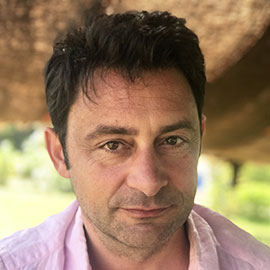
Alain Pellet, born on 2 January 1947 in Paris, taught public international law at the University of Paris Nanterre from 1990 to 2014. He was director of the university’s Centre for International Law (CEDIN) between 1991 and 2001, and has authored numerous books and articles. From 1990 to 2011, he was a member of the United Nations International Law Commission, which he chaired in 1997. He has advised numerous governments and international organisations, and has acted as counsel and lawyer in more than 70 cases before the International Court of Justice, the International Tribunal for the Law of the Sea and in various international or transnational arbitrations.