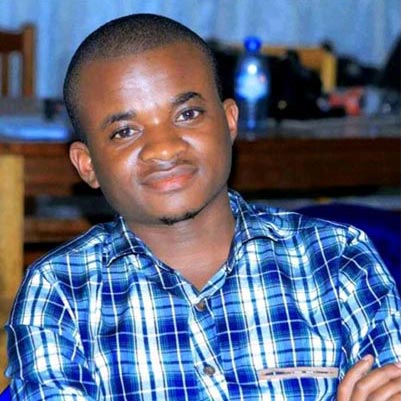
From November 24 to 28, 14 victims who joined the case as civil parties and five witnesses appeared before the judges and jurors to testify about what they experienced. They included several rape victims, who were heard in closed session. A traditional Pygmy chief from Epulu whom Justice Info’s correspondent met in Mambasa, eastern Democratic Republic of Congo (DRC), before he came to Paris, spoke again of the cruel acts endured by his community. He is identified only by the initials TUK.
Former Congolese rebel leader Roger Lumbala is being prosecuted by French justice for complicity in crimes against humanity, including alleged acts of rape, murder, torture and looting committed by his men during the “Effacer le tableau” (Wipe the Slate Clean) military operation. This was led by his movement, the Congolese Rally for Democracy-National (RCD-N). It was supported by Jean-Pierre Bemba’s MLC (Congo Liberation Movement), and aimed to conquer an area stretching to Beni and Butembo which was then controlled by warlord Mbusa Nyamwisi.
Raping even a pregnant woman
“We had just withdrawn to the forest when the Effacer le tableau troops attacked us. They did not respect our laws and customs, they broke into our houses to search, because they said we were hiding APCs [enemy soldiers of Mbusa Nyamwisi]. They came out with our belongings,” TUK told the court. The act that shocked this indigenous Pygmy chief the most during the October 2003 attack was the rape of his sister, then his aunt.
“My sister was pregnant and resting at home when we were attacked by four armed men. They took turns raping my sister in front of me and my father. I understood that ‘wiping the slate clean’ meant destroying everything,” said the victim, describing the “brutal” death of his sister, who could not be saved.
The chief told the court that he feared the same thing would happen to his wife, whom they had asked to prepare a meal. “They ate and took me as their guide to help them out of the forest,” he said. “On my way back, I saw the whole village in tears. My sister had been raped and was bleeding; she was nearing the end of her pregnancy. We had no way of transporting her to a hospital. She died three days after the incident. We buried her in a hole dug by a wild animal. We buried her like an animal.” He then spoke of what happened to his aunt. “She too was raped by three men, in the presence of my younger brother. Since then, she has been suffering from mental health issues,” he said.
“I came to defend justice”
The victims travelled from the DRC’s Mambasa region to Paris, France, because they say they want to defend their rights to justice and reparations.
“I came to defend justice and human rights. I travelled along dangerous roads to reach Beni and then flew to Paris because I want justice,” explained the Pygmy chief, who regrets that Lumbala is not attending his trial. “We came to tell him face to face what his undisciplined men did to our communities,” he says. Lumbala decided at the start of the trial to boycott it, saying he did not recognize the court and its jurisdiction to try him. “Roger Lumbala is afraid of his fate. If he were here, I would identify him, point out the man who arrived in Epulu. He is afraid because it is concerns him,” said the victim. He claims to have personally seen Lumbala land in Epulu, bringing ammunition to his men and some assistance to local communities.
“They burned our hunting nets”
“He had stepped down from a helicopter that landed on the ICCN runway (Congolese Institute for Nature Conservation in Epulu). He was dressed in a suit like me and had brought a few bags of salt and bars of soap that we shared. He had even held a meeting,” the victim recounted. Asking the court for compensation, he then continued: “I wanted to return from Paris with our hunting nets. They helped us catch game. They brought us money. We used them to catch mbuluku (antelope) so that tourists could admire them, and they paid us in return. But since they burned our nets, we have been living in poverty. Just imagine, the nets were used by more than 2,000 members of our community!”
All the victims who took the stand expressed their need for justice and compensation. But the court president urged them to be patient, saying this court is tasked with the penal aspect and limited to deciding if Lumbala is guilty or not. Only if guilt is confirmed will another court hear a civil case to determine compensation to civil parties – which, he pointed out, is not automatic because convicted persons may be indigent and there is a lack of mechanisms for compensating victims.
Lumbala’s responsibility
During this first week of victim hearings, the court sought above all to understand Lumbala’s level of responsibility. The accused had told investigating judges that he was acting under the command of the MLC. Victims confirmed that they had seen the MLC bring military reinforcements to Lumbala’s men in Mambasa, Epulu, and Isiro.
The court also drew on media reports in Congolese and Ugandan newspapers, as well as international media like RFI, in which Lumbala appeared to claim full responsibility for the RCD-N movement and being the father of the “Effacer le tableau” military operation. “If these troops were not from the RCD-N, they would never have agreed to go and get killed for me,” he told a journalist. The court listened to a December 2002 RFI news report in which Lumbala welcomed a UN-facilitated ceasefire agreement signed by the RCD-KML, RCD-N and MLC in Gbadolite, seemingly indicating that the RCD-N was acting independently and not under the MLC. The soldiers of Effacer le tableau were accused of crimes both before and during the MLC support. Among the first to denounce them was the bishop of the Butembo-Beni diocese who pointed to acts of cannibalism, according to the press reports read at Friday’s hearing.
A historic trial for the DRC?
The crimes of which Lumbala is accused are among hundreds documented in the United Nations Mapping Report, which charts more than 600 serious crimes committed between 1993 and 2003 in the DRC. There have not been any trials to date for these crimes in the DRC, where some of the alleged perpetrators remain in power.
At Lumbala’s trial, names continue to be mentioned, notably those of former MLC leaders Bemba and Constant Ndima. In December 2002 Bemba denied his troops were involved in Mambasa. However, Justice Info has spoken with dozens of witnesses and victims who claim that Bemba’s troops did indeed support Lumbala in his reconquest of Mambasa in late October 2002, and that they were led by Commander Ramses Widi Divioka, alias “King of Fools”, who reported to Ndima, now a general in the Congolese army. In a 2002 article read at Friday’s hearing, Ndima explained the meaning of the “Effacer le tableau” concept: “The enemy, Mbusa Nyamwisi’s RCD-KML, is like writing that is unnecessarily on the slate and so must be wiped out,” the former MLC military commander explained, countering accusations that the military operation targeted the Nande ethnic group and indigenous Pygmies.
Other victims, witnesses, and experts will be heard this week, some in person and others via videoconference from Bunia or Kinshasa.
Our correspondent’s stay in Paris is supported by TRIAL International and Impunity Watch, which are involved on the side of the civil parties. This support in no way compromises his independence, we mention it for the sake of transparency.