JUSTICE INFO IN-DEPTH INTERVIEWS
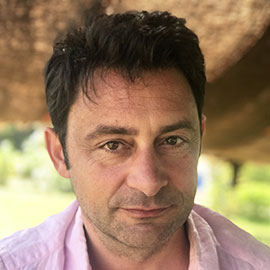
Frédéric Mégret
Professor of Law
JUSTICE INFO: Four years on, what progress on justice for Ukraine?
FRÉDÉRIC MÉGRET: With regard to criminal procedures, which have become symbolic of international justice and so often carry higher expectations, the International Criminal Court (ICC) has been able to do very little in the face of Russia’s complete and predictable lack of cooperation. There was a miracle for the Court in that Russia had committed crimes on Ukrainian territory and Ukraine accepted ICC jurisdiction, which meant that the Court did have jurisdiction. But of course, the arrest warrants issued by the ICC have not been implemented.
Trials have taken place in Ukraine. The Ukrainian authorities’ efforts and their great dedication to the cause of international law are to be commended. But here too there have been significant constraints, including the fact that very few people have been arrested and brought to trial, except for a few Russian soldiers who were captured on the battlefield. There have been a few trials, which have sometimes convicted -- rather inappropriately -- ordinary Russian soldiers for their participation in a crime of aggression. Nevertheless, these cases have helped advance the cause of justice by showing that impunity is not total.
For Ukraine, the record on criminal proceedings is very limited and shows that national and international justice systems have found it very difficult to transcend territorial boundaries and sovereignty with a war unfolding in real time.
There have also been relatively few trials under universal jurisdiction. The record on criminal proceedings is therefore very, very limited and shows that national and international justice systems have found it very difficult to transcend territorial boundaries and sovereignty with a war unfolding in real time.
Ukraine’s legal battle is not limited to criminal proceedings -- it has pulled out all the stops. Has this been a winning strategy?
As well as criminal proceedings, Ukraine has indeed developed a strategy of all-out litigation before multiple international courts, the results of which are far from negligible, even if they are not necessarily decisive. There are the cases before the International Court of Justice (ICJ), with at least one judgment already handed down in the 2014 case on Crimea, which found certain violations of the Convention on the Elimination of Racial Discrimination. There is also the case with a certain impact in which Ukraine alleges that Russia violated the Genocide Convention by invoking it in a misguided and bad faith manner to justify the so-called special operation launched on February 24, 2022. This led the ICJ to order provisional measures, which were, of course, completely ignored by Moscow. But the Court was not convinced by Ukraine and considers that Russia’s opportunistic invocation of genocide is not in itself a violation of the convention.
All this is a bit indirect. For Ukraine, it is a way of tackling this extremely complex, extremely violent process of a campaign of aggression that has been going on for more than ten years. The Ukrainians have certainly pulled out all the stops, but one sometimes gets the impression that in terms of representing what Russia has done, we are missing the point, namely the aggression.
Results at the European Court of Human Rights are more convincing, because using the human rights lens allows us to show a range of realities more directly related to aggression. The Court found multiple violations, particularly in the case brought in 2014 concerning Crimea. In particular, it highlights a clear interaction between human rights violations and aggression, through the use of force and discrimination against the occupied populations. All of this shows Russia in a bad light, which was undoubtedly Ukraine’s goal. And then, of course, there are the thousands of complaints filed by Ukrainian victims.
Ukraine has done itself and international law a service by arguing almost every possible angle in its favour. Its failures are due to the limitations of international law itself, and its partial successes paint a certain picture of what happened, one that will be more difficult to deny in the future.
Why was this so important for Ukraine?
These judgments are important for their content, despite the fact that they remain dead letters. They feed into a certain conception of the Ukrainian cause, a vision of the harm that Russia has caused. It is also a long-term investment in remembrance. Of course we would have liked more, but if this judicial work didn’t exist, it would be missing from our understanding of this history. Ukraine has done itself and international law a service by arguing almost every possible angle in its favour. Its failures are sometimes due to the limitations of international law itself, and its partial successes paint a certain picture of what happened, one that will be more difficult to deny in the future.
This snapshot of the situation in which they find themselves is being used to delegitimize Russia’s claims. Curiously, Russia has put forward many pseudo-arguments based on international law, notably the idea that it intervened to protect Russian speakers in eastern Ukraine. It was therefore important to combat these claims and to deny their plausibility before international courts. Whether or not the judgments were a clear victory, they still made it possible to rally the troops, put forward arguments, and speak out.
Has this had a real impact, a political one?
I think it has helped create solidarity and to back Ukraine’s military resistance with a political project to defend international law, territorial integrity and sovereignty. This helps boost consensus among states that think this way, without necessarily convincing those who do not. It is this project that today links Ukraine to the rest of Europe and its immediate geopolitical environment, and fundamentally opposes the rising predatory logic.
This was, in a way, the promise of international law: all states stand together in relation to these major prohibitions. If these taboos ceased to exist in certain cases, they would no longer exist for anyone, i.e., for other states that might be attacked or invaded in the future. The states that denied their political support to Ukraine so as not to offend Russia have in a way also weekend their own sovereignty.
Where this can also have a political effect, and this is much more concrete, is that once we understand Ukraine’s defence as a war of legitimate defence underpinned by the urgent need to respect and uphold international law, we rule out abandoning it and possibilities for negotiation. We protect ourselves against the temptation to concede territory in peace negotiations once we have rightly said that this is a war to the death to protect the survival of a people whose self-determination depends on the integrity of its territory.
Justice is also a way for Ukraine to engage with its own people and send a very strong internal message about President Zelensky’s determination to continue hostilities until Ukraine is reintegrated within its borders.
From this legal point of view, this war can only end in complete victory for Ukraine, with the recovery not only of the east of the country but also of Crimea. This is a defensible logic, even if it undoubtedly has a human cost and may also have a cost in terms of possible conflict resolution. It is also a way for Ukraine to engage with its own people and send a very strong internal message about President Zelensky’s determination to continue hostilities until Ukraine is reintegrated within its borders.
In a way, we should be grateful to Ukraine for defending international law on behalf of us all. What Ukraine has accomplished is an act of resistance to violations, which is in its own interest, but not only. This all-out legal strategy solidifies a united community, which until recently was transatlantic, in its desire not to reward aggression.
How much weight does this carry today in the American-led peace negotiations?
In absolute terms the law is of course not, a priori, an obstacle to peace.
We will need international law to conclude a peace agreement, which will only be worth what it is worth because also supported by some form of legal guarantee. There is a tradition in international law that I would describe as “solutionist”, which sees the law as a kind of toolbox for peacebuilding. This toolbox offers a series of proposals on how, in a post-war context, to disarm, restore trust between communities, address responsibilities, and provide guarantees for minorities. This is what we saw 100 years ago at the time of the Treaty of Versailles.
150 years ago, or even 100 years ago, there would undoubtedly have been an exchange of territories, concessions would have been made, but today this has become very difficult to do. What we have gained in better defence of a supposed collective order we have lost in flexibility and capacity for small diplomatic arrangements.
Until recently, at least, we were in an era, I would say, of more “axiological” ambition, where aggression is a crime, a violation of a norm in international law, such that one cannot simply give in to “make peace”. In other words, even if Ukraine were to acquiesce to its own invasion, the rest of the international community could see this as abandoning the defence of a common legal order. 150 years ago, or even 100 years ago, there would undoubtedly have been an exchange of territories, concessions would have been made, but today this has become very difficult to do. What we have gained in better defence of a supposed collective order we have lost in flexibility and capacity for small diplomatic arrangements.
This is the source of the major misunderstanding between Europeans and Americans today. In this Trumpian moment, Americans are proving to be much more favourable (in the best case) to a kind of peace of the brave, with negotiations that reflect a balance of power and that would be unapologetic with regard to international law, even if they will undoubtedly need its forms. Europeans, on the other hand, cannot, as a matter of principle, identity, and legal obligation, depart from their attachment to the prohibition of aggression. Any occupation is illegal, regardless of legal arguments, and carries with it a categorical obligation of non-recognition.
Here we have two ways of interpreting the world and, it could be said, two ways of interpreting international law. It is therefore not just a situation where international law is opposed to international politics, but rather two opposing visions of international law.
Listening to the US President, it seems clear that international law is being set aside in favour of economic “deals” and territories where the balance of power dominates, while at the same time claiming to bring peace in Gaza, Ukraine, the DRC and even Venezuela. Have we not left the realm of international law?
Indeed, there is a radical change in style, which is extremely transactional, extremely informal, based on personal relationships, networks, forms of economic predation, nepotism, and military “coups”. This is not even a form of traditional sovereignty or even an imperial model. It goes beyond that. There is a privatization of the state through the person of Trump and a set of economic and capitalist interests around him that are there, ready to take advantage of opportunities.
This style is imposed from above, by the personality of the president, who can count on more or less effective devoted intermediaries, at the cost of bypassing the traditional tools of American diplomacy. But the resulting policy is somewhat virtual. Despite all the claims of conflict resolution, not much is happening. Nothing has been resolved, certainly not in Gaza, Ukraine, or Iran. Everything is very fleeting, commensurate, I would say, with a project that is largely based on the style of an individual and the interests of a certain political caste incapable of perpetuating itself, precisely because of a sense of shared entitlement. This is the real Achilles’ heel of this administration’s foreign policy.
There have been some spectacular coups, such as the overthrow of Maduro and the bombing of Iranian nuclear facilities, but these are mainly big demonstrations of American military technology. They are short-lived and, while they make an impression, they reveal a strategy of constant adaptation and improvisation. This is a far cry from the logic of international law, which is supposed to guide the actions of states in the long term in order to ensure their coexistence in the most equitable manner possible.
Admittedly, some states bow down and are caught off guard by the violence of this change, joining, for example, Trump’s famous “Board of Peace”. But in reality, they often play a complex game with regard to Washington’s injunctions: we will put up with it if we have no choice, as in Venezuela, but we can still see that there is a strong potential for double talk, quiet defiance, and circumvention. We see this particularly in Canada’s efforts to build closer ties with China, and the European Union’s possibility of an anti-coercion strategy.
The United States guaranteed a certain international order, at great cost but also with great benefit to itself, and in exchange, the aligned states did not challenge its privileges. Now, the United States intends to maximize its privileges without assuming its obligations.
Is this not, more radically, a return to re-dividing the world between superpowers and, in this context, a declared plan to destroy the institutions and laws established after World War II that would prevent them from achieving this goal?
There is a very clear ideological project for a kind of re-appropriation of dominant, quasi-imperial sovereignty, at least in the Americas but also elsewhere. By isolating the United States and making it a bad ally, a state that cannot be relied upon, it paradoxically ends up diminishing American power at the same time. What’s more, it is a very 19th-century ambition focused on territorial domination with a mercantilist, even colonial logic, which ignores the fact that wealth and power today are above all the result of integration in a global economy, relatively open borders, and the ability to take advantage of brain drain, etc.
In reality, the United States is making a kind of insane bet linked to its declining hyper-power: that of continuing to enjoy the advantages of its hegemonic domination without having to fulfil its obligations. What must be understood is that for decades, there has been a kind of economy of obligations and privileges. The United States guaranteed a certain international order, at great cost but also with great benefit to itself, and in exchange, the states aligned with it did not challenge its privileges. Now, the United States intends to maximize its privileges without assuming the obligations that were linked to them and that made the whole thing, if not legitimate, at least acceptable.
There is a moment of shock when other states have to readjust their “software”, are in denial, and procrastinate. In a second phase, however, there will be an adjustment, a logic of counter-powers, coalitions, and a departure from this relationship with the United States, which is likely to set the world on a different course. Once American protection turns against those it was supposed to protect, it would not be surprising if major manoeuvres were triggered. International law will be affected because it is also somewhat the result of all these balances and imbalances of power.
In the meantime, it is not so clear how this opens up new perspectives for international law. Can you elaborate?
Alternative models already exist. We have a European model based on an alliance of medium-sized powers that were at war with each other for centuries and which have established a rather unique vision of partially overcoming sovereignty based on values of exchange, democracy, human rights, etc. This model certainly has its grey areas, particularly with regard to migration flows and the relationship to its colonial past, but it is a model distinct from that of the United States, focused on building something supranational. This is why Europe is perceived by MAGA as the absolute counter-example, more so than China or Russia, which are geopolitical rivals but less so political rivals. The European Union is not a geopolitical rival, but it is a political rival because of its model, which is now quite profoundly alternative.
Then there is the Russian model, which is close to the American model of today: that of the oligarchs, an unemotional model that is attempting to spread to Africa and Eastern Europe through interference. We have a Chinese model, which is authoritarian, top-down, monopolistic, very powerful economically, and which has a tendency to subjugate other states, but which nevertheless plays the card of business, respecting sovereignty, and energy transition. Then we have other regional models, close to the European model, such as the African Union, which is not talked about enough and which is trying to develop a pan-African vision of the continent. Latin America is struggling to unify at the moment, but the Americas are not limited to the United States, far from it.
We live in a world where there is inertia, but where weaker states have options and ability to adapt to what is now a very hostile environment -- and where the void left by American power will be filled by others.
Europe is at an absolutely crucial moment because, in its relations with the United States, Russia, and even China, it can play a redefining role. But the European model of transcending the nation-state through international law seems to be more advantageous internally than it is when viewed from the outside. Africans often feel that Fortress Europe is rebuilding a form of hostile civilizational superiority, leading to the deaths we see in the Mediterranean. Perhaps Europe is also too obsessed with its relationship with the United States, to the point of not seeing that another world of possibilities is taking shape around it.
What is dying is the idea that international law could be an ambitious standard for the whole world. It is the idea of a universal law, which is, after all, quite recent, since until the beginning of the 20th century such law applied only to European, white nations.
What is dying, and what is about to be born?
This is a central question. It seems to me that what is dying is the idea that international law could be an ambitious standard for the whole world. It is the idea of a universal law, which is, after all, quite recent, since until the beginning of the 20th century such law applied only to European, white nations.
Here, there may be a phenomenon of re-regionalization of international law. We are going to have less and less international law, and more and more regional, even interregional law. There is a risk that there will be a specific legal mode of relation to the hegemonic powers and a distinct legal mode of relation between the famous “middle powers”, as Canadian Prime Minister Mark Carney put it. And we will see the emergence of vast “silos” where what was once the ambition of universal international law will take refuge.
Where, for example?
I don’t think that European, Latin American and African countries will think in future that because Trump doesn’t respect the prohibition on use of force it means that prohibition no longer applies in their relations.
These states are committed to defending a model not just because the international community does so, but because they consider it to be in their interest and in line with their values. However, when there is a strong enough link between interests and values, conditions are conducive to the emergence of relatively durable norms. Therefore, the destruction of these norms by any one state is, in principle, never enough to make them lose their appeal and relevance in international relations.
Even at their best, all these projects -- products of 20th-century liberal internationalist thinking -- have always been rather weak, barely begun, and contested as soon as major powers were involved. Let us not delude ourselves: there has not been such a great break with the past. International law was always a grand design that has never been fully realized and has always been fundamentally uneven from one region to another, or depending on whether a state was weak or powerful. But for those states that considered it still the best option for guaranteeing a certain level of predictability, stability and justice, international law will continue to be a strong model in their relations.
One example is the Special Tribunal for Aggression against Ukraine. It was out of the question for the Security Council to create a new ad hoc tribunal or consider a universal treaty, which many states would never have joined. On the other hand, the Council of Europe can decide, given bilateral cooperation with Ukraine, that it has enough support to create a tribunal to judge people like Putin, who decided on the aggression and has been carrying it out all these years.
Ukraine is a sovereign state, the member states of the Council of Europe are sovereign states, and they have the right to create an international tribunal to judge crimes committed on the territory of one of their own. No one can deny them that right.
So we are doing this in the name of international values, to defend a regional interest?
Yes, of course. It’s a bit paradoxical. We are creating a kind of international law in a provincial way. We are doing it on a regional scale, in a relatively arbitrary manner, because it is significant for Europe and because Europe is likely to give itself the means to do so.
And even if there were no universally recognized international law prohibiting aggression, we would still have the right to do so. Ukraine is a sovereign state, the member states of the Council of Europe are sovereign states, and they have the right to create an international tribunal to judge crimes committed on the territory of one of their own. No one can deny them that right. Their sovereignty remains a fact.
This is what has happened in the field of human rights. There is no international human rights court, but Latin America, Europe, and the African Union have forged their own regional instruments that go further than universal instruments. I am not necessarily advocating regionalization as a solution to everything. I am simply noting that it provides a space for the extension and survival of international law even at the worst moment of its crisis and that, after all, it is a model that can be attractive.
Even if their logic is not always economically or politically functional, we see that the power of people like Trump, Putin and Erdogan -- based on oligarchic and mafia networks -- is proving less fragile than that of democracies...
Yes, indeed, there is a race between two models of governance that will determine the future of international law. We are in a moment of crisis for the state, as shown in a mixture of authoritarianism and populism that is proving quite successful in practice. It is a model that provides structure and meaning, even if adulterated, in a world that is becoming empty of these things and is haunted by multiple crises: those of borders, privatization, artificial intelligence, global warming, and the necessary adaptations of industrial society.
All these crises create tremendous anxiety about the very foundations of the state. As soon as we touch on these foundations and the authority that emerges from them, we touch on international law and the way states organize their relations with each other. Those who are currently emerging from this chaos are—notably, but not exclusively—strong leaders, warlords, dictators, people who promise the moon, who claim to have an atavistic vision of the nation as one response to this perception of a world that is falling apart. This produces systems of governance that, it must be acknowledged, have a certain durability.
Opposing internationalist liberalism to the authoritarian populist model is not really the response that the moment deserves. We are at a point of change and adaptation in the world and, in the prevailing chaos, it remains difficult to see which paths are being traced.
Faced with this, there is a temptation for internationalists and democrats alike to call for a statu quo, a return to a mythical past where democracy and international law reigned supreme. I believe that we need to examine the conscience of the liberal thinking that has dominated the world for several centuries -- what it has achieved in terms of emancipation and promise, but also in terms of subjugation and compromises in colonial and imperial adventures, racism, and sexism. Opposing internationalist liberalism to the authoritarian populist model is not really the response that the moment deserves. We are at a real point of change and adaptation in the world and, in the prevailing chaos, it remains difficult to see which paths are being traced.
So a central question is to what extent international law will become independent of the old, white, dominant world that created and shaped it...
Obviously. Even before Trump, international law was far from leaving only good memories among the states of the Global South. They do not share the same vision as the supposedly universal one promoted in Europe. This does not mean that they are hostile to international law, but that they are fighting for a vision of this law that is quite distinct from the one imagined in Paris, London, or Berlin.
We a need to take a critical look and understand how this populist hurricane is sweeping away not only our democracies but also international regulation, and to see the complicities or weaknesses of this legal order. When people talk about the “rules-based international order” it always makes me smile a bit. Of course it corresponds to something, but the perception of it varies depending on the continent from which it is observed.
International law is a legal system that is highly structured by the history of the West and by the history of Europe. The chances of this history becoming the natural matrix for global relations were slim from the outset, even though a real effort at universalization was made.
International law may be a Titanic, but it is also a ship that cannot slow down or change direction in a second. However, I would say that the most important thing is not to look at the foam on the waves, but to understand the swell and the tide.
After four years of war in Ukraine and Trump’s return, do you also feel that we are at a point in history where we need to change our approach?
I think this change in approach is undoubtedly already underway. But I am also wary of talk of adapting too quickly. I think it’s still too early to tell, that the history of international law is made up of sudden setbacks. As I tell my students, “You think international law is in a bad way, imagine it in 1939, in 1914, or during the Cold War”. There has never been an ideal moment for international law, not even during the 1990s, when everything remained problematic in some respects. So yes, we are closing a chapter that began with the fall of the Berlin Wall, but it had already been partially closed with 9/11 and the war on terror, the pandemic, etc.
In addition, the narrative and key actors may change, but the fundamentals remain the same. Our international society needs legal regulation. Standards cannot be completely out of step with the reality of the world, but neither can they be a simple description of reality and risk ceasing to be standards at all. The principle of a standard is that it is dynamically opposed to what key people would just do based on their own rationality or what they had for breakfast.
International law may be a Titanic, but it is also a ship that cannot slow down or change direction in a second. However, I would say that the most important thing is not to look at the foam on the waves, but to understand the swell and the tides. Looking at major trends tells us more than obsessive observation of what is happening in the White House. The major trends are global environmental and climate degradation, the ongoing industrial revolution, and glaring inequalities within and between nations. All of these things are constant, profound, and shape our entire repertoire of adaptations to the world, of which international law is only one variable.
Populism is an adjustment variable in relation to these major structural crises. But international law is also a desire to shape the world in its own image. Lawyers don’t like to admit it, but it is an ideology, even if its ambitions are partly emancipatory. Thirty years ago, we relied on human rights, international criminal justice and international trade law. These ideas, as understood then, have aged more or less well. There are other directions that can be taken today, there are ways of combining these ideas. There are reservoirs of worldviews that we are only just beginning to seriously explore.
What we have not tried historically is international law based on a much more multipolar world, much more stable and solid forms of regional order, and therefore to a balance of power that would not necessarily be incompatible with international law.
What areas of exploration do you see developing?
What we have not tried historically is international law based on a much more multipolar world, that is, a world made up of a large North American or American bloc, a European bloc, an Asian bloc, and an African bloc. This world could give rise to much more stable and solid forms of regional order, and therefore to a balance of power that would not necessarily be incompatible with international law.
Thinking about international law also means thinking about the conditions that make it possible, including the way in which it is anchored in geopolitical and world economic balances. International lawyers, those who believe in sovereignty, certain values and the possibility of reconciling them, should also think of themselves as engineers not only of international institutions but also the power balances that would support their deployment. They need to take a long-term view, so as not to become entirely caught up in the moment.