JUSTICE INFO IN-DEPTH INTERVIEWS
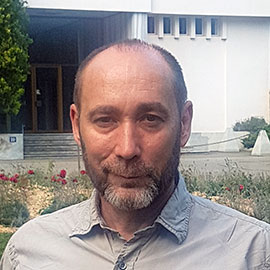
Richard Rogers
Human rights lawyer
JUSTICE INFO: The definition of a sanctions regime is a set of restrictive measures imposed by one or more countries against another country, organization, or individual, to achieve foreign policy goals. There exist lots of sets of sanctions, including on trade, but what we seem to be interested in here is what is called the Global Magnitsky Human Rights Accountability Act. Could you go back to the origin of it – when, how and why this sanction regime was created?
RICHARD ROGERS: Well, there’s not only the Global Magnitsky Act, but that’s certainly the most well-known one. Pre Magnitsky sanctions regimes targeted entire States. They would impose trade embargoes, financial isolation, etc. But those ultimately were seen as pretty blunt instruments, and not as effective as they could have been, because they affected entire populations; while the political and military elites simply adapted and stashed money in offshore accounts, and even profited.
So, from about the late 2000s onwards, the Western States adapted their approach, and they brought in these individualized, targeted sanctions regimes where sanctions would hit the actual decision makers, the enablers, and the beneficiaries of the abuses. The idea was to hit these individuals where it hurt by preventing them from traveling or from shopping in the West, freezing their assets, and undermining their ability to do business through the Western financial systems.
It all started, really, with the Magnitsky Act in 2012. That was a U.S. act that targeted a group of Russians who had effectively murdered Sergei Magnitsky, who was the lawyer for Bill Browder, a British American financier who had been working and investing in Russia. The act was seen as quite effective. And Bill Browder went on to lobby the U.S. Congress to adopt a global version of that act. In 2016, the U.S. brought in this Global Magnitsky Human Rights Accountability Act which allowed the U.S. to sanction foreign individuals who were responsible either for human rights abuses or for significant corruption. The tools included asset freezes, bans on using the U.S. dollar system – which is quite extensive – and travel restrictions. And not only for the individual perpetrators, but also for their family and for their businesses.
So if you’re sanctioned by the U.S., you can’t travel to the U.S., and U.S. nationals can’t deal with you – you can’t get American lawyers, accountants, investors, to support your businesses. If you have property in the U.S., it’s likely to be frozen. Depending on the wording of the sanctions, your family may not be able to get visas for the U.S.
Many of the corrupt elites have their kids in universities in America; their wives go shopping in London and New York. Whether being designated by the U.S. makes a big difference or not depends on your lifestyle. But because the world still relies on the U.S. dollar so much within financial systems, U.S. sanctions normally touch on people’s lives, one way or another.
By 2020, practically the whole of the West had individualized, targeted sanctions regimes to target human rights abuses and corruption.
Ultimately, these targeted sanctions were seen as an effective tool. After the Global Magnitsky Act, Canada, the United Kingdom, and the European Union brought in copy-cat Acts, which did similar things. So by 2020, practically the whole of the West had individualized, targeted sanctions regimes to target human rights abuses and corruption.
Then, on top of that, there may be more specific regimes that came in relating to specific countries or specific events. An example of that are the sanctions relating to Belarus. In 2020, there was a stolen election and civil demonstrations in Belarus, followed by a violent crackdown by the regime. Hundreds of protesters were beaten, many were killed, and thousands imprisoned unfairly. The EU and the UK adopted specific Acts to target individuals who were involved in that repression.
It’s implemented for a specific situation, and for a specific amount of time, but it works under the same principles?
Yes, and it might be broader. For example, in relation to Ukraine, there are many different sanctions regimes that might target a whole sector – those who are supporting the occupation [by Russia] through financial institutions, or those who are supporting the Russian war through the energy sector.
So it can be sector specific, it can be event specific. But the idea is always to target individuals, their families, and their companies.
When did it become a useful tool for human rights activists or lawyers like you?
I was involved to a very small extent with lobbying for the Global Magnitsky Act. So I knew that was coming, and as soon as it was adopted, I was filing applications under that Act. For example, I used it to target corrupt human rights abusers from the Cambodian regime. With some success. The Americans sanctioned Kun Kim, who was the deputy supreme commander of the Cambodian Armed Forces. He was sanctioned for corruption and human rights abuses. He had about five companies sanctioned, and several family members as well.

And how efficient was that?
It’s hard to tell what effect sanctions have on the targeted person. It’s very difficult to measure. Unfortunately, most of those who are targeted are already so wealthy and connected that they can adapt without affecting their lives too much. But it’s fair to work on the assumption that designation does have a deterrent effect. And in some, perhaps many cases, it changes people’s behaviours.
Which is the point?
Which is exactly the point. The idea of individualised sanctions is to prevent people from committing human rights abuses or pursuing corrupt practices, and to change their behaviour to conform with Western foreign policy.
If you file a case to a human rights court, it will take years to get a result. But, if you’re lucky, you can file a request for sanctions and get a result within weeks or months.
How wide the use of sanctions regimes by human rights lawyers became after the Magnitsky Act? Would you say that this tool proved to be a powerful new avenue for you to take action, in the absence of other criminal justice options, for instance?
They’ve been incredibly useful. Partly because they can be much quicker than a judicial process. If you file a case to a human rights court, it will take years to get a result, the same with the International Criminal Court (ICC), or with universal jurisdiction cases. But, if you’re lucky, you can file a request for sanctions and get a result within weeks or months.
Secondly, the evidential standard is much lower. Because it is not a judicial decision, you don’t have to meet the standard of beyond a reasonable doubt, or even the balance of probabilities. You simply have to convince those working in the U.S. Treasury or State Department, or the equivalent in the UK or Europe, that there is a reasonable case.
Could you give us a couple of concrete examples of typical situations in which you would use or activate the sanctions regime?
Let’s take the example of Cambodia, where there is an autocratic kleptocracy, where many members of the ruling elite commit acts of corruption and, inevitably, human rights abuses. This is a very good example where the U.S. or the UK or the EU might want to act to try to influence behaviour. Because those corrupt officials almost always have property or businesses in the West, if they are sanctioned, their property will be frozen, they won’t be able to use it – it won’t be confiscated, but it will be frozen for the period of the sanctions – and it will be difficult for them to use Western financial systems. Money flows will be undermined for them. That can be very effective.
Another example is Belarus. We [Global Diligence] did research into the judges and prosecutors who were involved in the unfair trials of protestors. Judges and prosecutors were using the power of the state as a tool of repression, rather than acting as an independent judiciary. We filed an application to the EU and it sanctioned judicial actors, in addition to security officials. They sanctioned quite a large number of judges and prosecutors off the back of that work.
Certainly in the past, there has been a reluctance to sanction judges and prosecutors. It has been done, but it seems to have been a very high bar, understandably.
Was it the first time you were targeting judges and prosecutors?
No, it was the second time. After the success of our application in relation to Kun Kim, we filed a second application on Cambodia. This was broader and identified some very senior members of the judiciary who were undoubtedly acting as tools of the regime, who were ensuring that the legal system was not independent, and was simply a way for the ruling elite to consolidate their power, to commit human rights abuses, and to steal money. We filed an application to the U.S. requesting designation of the head of the judiciary and others. But they did not. So that one was unsuccessful.
Certainly in the past, there has been a reluctance to sanction judges and prosecutors. It has been done, but it seems to have been a very high bar, understandably.
Would they give you an explanation when they do not grant your application?
No. They don’t really give any reasons to the organizations that submit applications. A decision is made, and you are informed when the decision to sanction people is published. Generally, you don’t get feedback if there’s a decision not to sanction. It depends to some extent on your personal relationship. The U.S. are actually more accessible than the UK in terms of engaging with civil society on these issues. Human Rights First is the main non-profit organization based in Washington DC dealing with sanctions. It has a very close relationship with the Office of Foreign Assets Control – OFAC – at the Department of the Treasury that deals with sanctions. Through Human Rights First, we did have face-to-face meetings with OFAC officials to discuss applications. But they would not say what they were going to do.
If we go back to the definition, it’s clear that the sanction regime is to achieve foreign policy goals. It was meant to be used for political purposes. For instance, the Trump’s administration is currently working on a fresh set of sanctions that is expected to target senior security officials from Rwanda, because the U.S. is demanding the withdrawal of the Rwanda-backed M23 rebels in Eastern Congo from areas that were conquered by the M23 since the signing of a peace agreement supported by the U.S. between the Democratic Republic of Congo (DRC) and Rwanda last December. Because the agreement was not respected, that’s how the U.S. now wants to put pressure on Rwanda. Is this a classic use of the sanction regime?
Yes, very much. It’s about using this political, diplomatic tool to influence actors to operate in a way that conforms to the foreign policy goals. It might include sanctions against individual actors in countries that allow China to build large ports for their navy, for example. It might include sanctions against political actors who are fuelling conflict within their country. These relate to foreign policy goals of the U.S.
So from the beginning, sanctions regimes are this ambiguous, or double-edged, sword-like system: it was not only about being a good moral, human rights tool, it was highly political.
Yes, they’ve always been political. Generally, The U.S., the UK, the EU, will not be sanctioning friendly countries, or individuals that are close to the regimes in friendly countries, even if they are corrupt, even if they are committing human rights abuses. It’s very much a diplomatic tool that is used to target enemies, or individuals in countries that are seen as unfriendly.
What’s changed under the current U.S. administration is that the ICC is seen as threatening the U.S. interests by targeting U.S. allies, key U.S. allies in the Middle East.
So based on what you told us, in what sense the sanctions against ICC senior prosecutors and judges are a clear departure from past practices?
Firstly, you’ve got to remember that Western countries have targeted judicial officials before, like in the example that I gave on Belarus. What’s different today is not the use of sanctions, but who or what is considered to be ‘friendly’, and who or what is considered to be for or against foreign policy interests. That’s what’s changed. Previously, the ICC, as an international judicial organization, was generally seen as friendly to the West. The Americans were always skeptical about the ICC, but it certainly wasn’t seen as working against the U.S.’s foreign policy interests. What’s changed under the current U.S. administration is that the ICC is seen as threatening the U.S. interests by targeting U.S. allies, key U.S. allies in the Middle East.
Meaning Israel.
Yes. So it’s not completely inconsistent with the U.S. use of sanctions in the past, in the sense that they’ve used sanctions to target individuals or bodies that they consider to be against the U.S. foreign policy interests. What has changed is the group they consider to be friends or foe.
I should also say that, when the EU sanctioned Belarusian judges, it was on the basis that they weren’t acting as independent arbiters. They were acting as tools of a repressive regime. So it’s quite a different circumstance to the ICC judges. I don’t think there are allegations that the ICC judges are somehow corrupt, or that the ICC is simply a tool for some kind of repressive international organization.
This is very much a signal from the U.S. that it’s prepared to use sanctions to influence judicial decisions that affect its perceived security interests. It’s not going to stop at sanctioning political, military or business leaders in certain enemy or neutral countries; it’s prepared to go further than that and to target individuals in international organizations. As far as I know, the Trump administration has been the only one who has targeted officials within an international organization.
When Russia sanctions, it doesn’t have the same consequences for the individual – not traveling to Russia is not a big deal and the target person is not going to be blocked from a major banking system.
Russia also has its own targets and sanctions regimes. But, of course, when Russia sanctions, it doesn’t have the same consequences for the individual – not traveling to Russia is not a big deal and the target person is not going to be blocked from a major banking system. Russian sanctions simply don’t matter nearly as much as sanctions from the U.S., or even the EU or the UK.
Once you’re on the list of U.S. sanctions, how do you get off?
You can apply to OFAC to remove the sanctions. And generally, there can be two angles: that there was no basis for the designation in the first place, there wasn’t sufficient evidence to support the allegation; or, you can show that your behaviour has changed since the sanctions were imposed.
For ICC judges and prosecutors, they could presumably also apply to the U.S. to have their designation removed. They could argue that the underlying basis for the sanctions is not supported by the evidence, that the prosecutorial and judicial acts were not an ‘extraordinary threat’ to U.S. national security interests and were not politically motivated or selective.
The second option is to show how they’ve changed their behaviour. That’s more difficult for the judges, because they’re very unlikely to reverse the decisions that they’ve made on Israel… that would effectively demonstrate that they are not independent. It would almost prove the point of the U.S., but the other way around. So that’s not a realistic option for them.
Failing that, they may be able to lodge an appeal through the U.S. courts. But the courts give the U.S. government a lot of leeway. So I’m not sure how successful either of these avenues would be.

I don’t think there’s any need to amend the Magnitsky Act. It has a huge amount of discretion built into it already. So different regimes will use it in different ways.
Would you say that the Trump’s administration move against ICC judges to some extent has changed the credibility of the U.S. sanctions regime? Could human rights lawyers like you keep using it in the future and ignore the way it has been used against themselves by the same government? Can you be blind to its abuse and use it when it goes your way? And finally, will there be a need to amend the Magnitsky Act once the Trump era is over?
Well, firstly, I don’t think there’s any need to amend the Magnitsky Act. It has a huge amount of discretion built into it already. So different regimes will use it in different ways. I think it’s relatively normal to expect a shift in foreign policy between different administrations in the U.S. And with that shift in foreign policy, there will be a shift in the targets, because the Magnitsky Act is about targeting those who are considered to be working against U.S. national interests, U.S. security interests. And that will change according to the administration and their priorities. So there’s no need to amend the Act.
In terms of whether human rights lawyers should boycott using the Global Magnitsky, obviously that’s a question for every individual lawyer. But there are only so many options available for human rights lawyers to make a difference. And if they can keep using the sanctions regimes to target the bad guys and make a positive difference in poor countries where victims are still suffering, then it’ll be difficult to give up that option. There are so few options available.
Yes, the U.S. has shifted its emphasis. But there still is an overlap between what human rights lawyers want to achieve, and what the administration wants to achieve. Take the example of Rwanda: many people working on the DRC want to see Rwanda withdraw from the Congo, because the M23 are committing horrendous acts in Eastern DRC. So to put pressure on Rwanda to withdraw its support and influence on M23 is very welcome.
The same goes for Iran [This interview was recorded prior to the armed attack of the US against Iran]. There’s a lot of convergence of interest between human rights activists, both on the ground in Iran and abroad, with the Trump administration’s approach to influencing the Iranian regime. So, it’s not that the Trump administration doesn’t do anything that’s supported by human rights lawyers. It’s just that there is a different emphasis, and there are very obvious examples when it acts in a way that is contrary to what’s generally favoured by international human rights lawyers.