On 18 June 2001, just after nine o’clock in the evening, Carl Bildt sits down to write an email to the board of the Swedish oil company he has just been elected to. The subject line reads “Boarding Meeting in Stockholm,” and it is addressed to Ian Lundin and Alexandre Schneiter – both senior executives of Lundin Oil, now accused of complicity in war crimes.
Bildt served as Prime minister of Sweden (1991–1994), and later became its Foreign affairs minister (2006–2014). He was invited to join the board in the spring of 2000 after several NGO reports had accused the company over its Sudan concession and the consequences of oil exploration during the civil war. His international contacts could help the board in finding solutions in relation to the conflict and provide knowledge of the local political context.
“Energy issues are generally quite political, and the Lord has placed the resources in areas that are at times problematic,” Bildt has explained when describing his role on the board.
Bildt writes that he sees “more signs that things are heading in the wrong direction.” He says that the Sudan People’s Liberation Movement (SPLA), in rebellion against the government of Sudan, “are making gains in their offensive and the regime will respond. I have not heard of problems in the oil areas, but we can expect a large influx of refugees.”
He adds that the SPLA rebels will likely try to strike at oil installations, and that the company must be prepared both “on the ground” and in the media, since they are their “real targets.”
The next morning, on 19 June at 09:07, Bildt writes a new email saying that “the company must not be seen as a defender of the government,” because Sudan’s army “has bombed indiscriminately” and attacked a location where the United Nations distributes food to refugees.
A minute later, at 09:08, Ian Lundin replies that he agrees with Bildt’s assessment and writes that “the propaganda in the West is coordinated” with the rebels’ “attacks on the oil areas,” and that the government army will now probably have to carry out certain offensive measures to “maintain some kind of stability in the area.”
The exchange is a small part of the evidence contained in the 80,000-page preliminary investigation that forms the basis of the longest trial in Swedish history.
The most high-profile witness
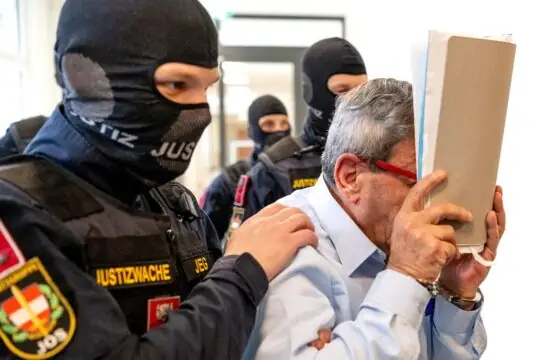
For more than two and a half years, courtroom 34 at Stockholm District Court has been occupied three days a week by one of the most far-reaching criminal proceedings ever held in Sweden. The so-called Lundin trial concerns allegations that oil exploration in what was then southern Sudan between 1999 and 2003 was facilitated through serious violations.
Over time, the daily grind of hundreds of hearings has thinned media attendance. But on the morning of 15 January 2026, journalists once again filled the courtroom to capacity. The reason was the testimony of, by far, the most high-profile witness to appear so far.
“I, Carl Bildt, solemnly declare and affirm on my honour and conscience that I will speak the whole truth and conceal nothing,” he said as he took the stand, before being reminded that he was testifying under criminal liability.
Bildt is not accused of any crime. Nor is he the most central witness in a case that includes more than sixty testimonies, 32 plaintiffs and a decade-long investigation. Yet his appearance crystallized one of the trial’s core questions: how far does responsibility extend when corporate activity intersects with armed conflict?

A witness called by the prosecution
The defendants are former executives of Lundin Oil, now Orrön Energy after the sale of its oil and gas assets. Prosecutors allege that the company’s operations in Block 5A were made possible through military campaigns carried out by Sudanese government forces and allied militias – campaigns that involved war crimes against civilians.
The prosecution’s legal theory is one of aiding and abetting. Under international criminal law, this does not require direct participation in the crimes themselves, but knowledge that one’s conduct contributes to their commission.
It is in this context that Bildt’s testimony matters. As a board member during part of the relevant period, prosecutors argue, his knowledge is relevant to what the company’s leadership knew – or chose not to know – about events on the ground.
Asked whether he bore responsibility for the company’s activities, Bildt replied it was about “taking responsibility together for the decisions of the board”.
From a country at war to a narrow operational corridor
When Bildt sat down before the judges, Sudan initially appeared in his account as a vast and complex country at war. Over the course of the day, that landscape steadily contracted.
Prosecutors presented incident logs, UN assessments and NGO reports documenting aerial bombardments, village burnings and forced displacement across Block 5A. Bildt responded by drawing a firm boundary around what he considered relevant knowledge.
“Block 5A is large,” he said. “What happened in all parts of the block, we could not possibly have an understanding of. We could only have an understanding of those parts where we could see things with our own eyes. That lies in the nature of things.”
Again and again, he described events outside as occurring “a good distance away”, “earlier”, or in areas where the company had no presence.
When asked whether he had been in Block 5A, Bildt answered “both yes and no”. He described flying in a small aircraft from Khartoum but being unable to land in Rubkona because the airstrip was flooded.
“From the air, I still got a sense of the character of the area,” he said, adding that whether this counted as having been there was “a matter of definition”.
“I do not recall”
A recurring phrase ran through the testimony: I do not recall.
Bildt said he did not remember reading a 1999 report by Médecins Sans Frontières documenting widespread aerial bombings of civilian targets in southern Sudan.
When confronted with internal security logs describing attacks on oil installations, ambushes on company contractors and bombings attributed to government forces, his response was equally consistent: “No, I was not informed of this,” he said after one such incident was read out. “I will testify about what I know, and this I did not know.”
At one point, prosecutors presented a detailed incident from February 2000, in which the Lundin’s owned Thar Jath drilling rig was bombed with a 500-pound bomb followed by twelve artillery shells. According to the log, the Sudanese army claimed responsibility, explaining it had bombed “the wrong coordinates”.
“I see that the army says it made a mistake,” Bildt responded. “But this was not something that was reported to me.”
When asked about a separate incident – on 29 February 2000, a truck that belongs to the company hired by Lundin to build the oil road is attacked, 13 people are killed and several others are injured – Bildt also says that he received no information about this either.
“I found it remarkable how few security incidents there were,” Bildt said. “I had some experience of conflict areas, and there was – I must say – unusually little of that.”
“Local conflicts” and shifting loyalties
As prosecutors pushed further, Bildt repeatedly framed violence as the result of local dynamics rather than state policy.
“There were clashes in the area between militia groups,” he said after reading a log describing armed confrontations. “It is difficult to know exactly where this is on the map.”
Asked whether he was aware that militias were uniting to fight government forces, he replied: “That is not particularly remarkable. SPLA was opposed to the army — that was the core of the conflict.”
When a document from March 2000 referring to plans by government forces to “burn the rebels out” south of Bentiu was put to him, Bildt responded: “That the military was involved in the war could be read in the newspapers. That was not remarkable. Starting fires – no.”
Internal reports and “hypothetical reasoning”
Prosecutors also presented weekly reports from Lundin’s local manager, Ken Barker, sent to Geneva and describing the security situation in Block 5A as “condition BLACK” — the most severe classification.
“I am not familiar with this document,” he said when one was read out in court. “But it is not strange that the army was present — nor that they wanted the road to be completed.”
Minutes from a board meeting noting that “security problems” had made it impossible to complete the work programme also failed to jog his memory.
“Do I remember this? The answer is no,” Bildt said. “But if you suspend operations, that costs money.”
Then prosecutors presented the first corporate social responsibility report commissioned by Lundin, outlining three strategic options for Sudan: “business as usual”; withdrawal; or continued presence combined with cooperation with NGOs.
Bildt read the document carefully before concluding: “This is hypothetical reasoning. It is not a description of what was — but of what could be.”
“The area”
The most consequential moment came when prosecutors asked Bildt to clarify what he meant by “the area”.
“It is Rubkona, Bentiu, and the road down towards Thar Jath,” he said.
Pressed further on whether bombings could have occurred in parts of Block 5A where the company did not operate, Bildt replied: “That I would be certain of, if I had heard about it. And I did not hear about it.”
By the end of the day, the term “Lundin area” had acquired a precise meaning: not the legal concession known as Block 5A, but a narrow operational corridor defined by roads, airstrips and facilities.
“We use ‘Lundin area’ in different senses,” Bildt said under questioning. “By ‘Lundin area’, I mean where we actually were and where we could see what was happening – not Block 5A as a whole.”
"Oil was a factor for peace"
Throughout his testimony, Bildt returned to a broader narrative: that oil could be a force for peace.
“I informed the leadership,” he said of his meetings with Sudanese officials. “What was obvious to me was that oil was a factor for peace.”
Aerial bombardments, he said in one meeting with Sudanese negotiators, were “useless” — a remark he later clarified in court as meaning “militarily meaningless”.
From a civilian perspective, he added: “It is obviously not good to be bombed.”
Yet prosecutors pointed to emails in which Bildt warned that oil installations were “real targets” and acknowledged that oil extraction risked exacerbating the conflict.
Reading one such email (read below) aloud in court, Bildt remarked spontaneously: “It is well formulated.”

A case beyond Sweden
The lawyer of Lundin, Torgny Wetterberg, presented Bildt with a document dated 24 July 2002, containing a report that summarizes all the meetings Bildt held in Nairobi and Sudan during a “fact-finding mission.” The list shows that he met with SPLA-affiliated aid organizations, Americans, the then President of Sudan Omar al-Bashir, and many other actors.
Asked what they gained from these meetings, Bildt replies that he gained knowledge of the conflict and that “the allegations that appeared in the reports did not recur in the conversations.”
“Western eyes and ears in the area were stabilizing. No one said that we should leave, and steps were taken toward some form of peace,” Bildt says.
In the memorandum summarizing Bildt’s trip, it is stated that his conclusion was that “no army wants to fight a war it cannot win.” It also notes that revenues from oil were not as large as many believed at the time.
Point four notes that none of the people Bildt spoke with wanted the company to leave, though representatives from the South wanted operations to be suspended. Bildt also notes that the local population wanted engagement from the oil companies for an increased pressure on the regime to allow humanitarian actors access.
Bildt’s testimony did not resolve any central issues in the Lundin case. Instead, it illuminated the mechanics by which responsibility can be narrowed — not by denying that atrocities occurred, but by redefining where they are deemed relevant.
By the end of the hearing, Block 5A had been reduced from a vast concession in a war-torn region to a road, a town and a handful of sites visible from the air.