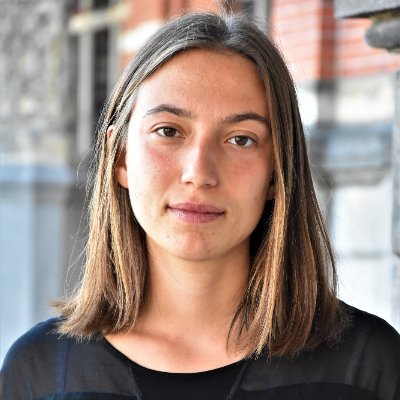
“The impact of the sanctions has been huge on PCHR, it goes beyond what we first anticipated”, says Basel al-Sourani, from The Palestinian Centre for Human Rights (PCHR). Founded in 1995 and based in Gaza, PCHR provides legal aid to Palestinians on the ground and has worked to provide evidence and connect victims and witnesses with the International Criminal Court (ICC). Al-Sourani warns that “no one else” will do that documenting work. His organisation is trying to continue engaging with the Hague Court, he says. But “instead of putting all our efforts towards documenting the genocidal crimes committed by Israel since October 2023 and ensure there is accountability for all the crimes committed, we had to put efforts and resources to deal with the impact of those sanctions.”
PCHR, together with NGOs Al Mezan Center for Human Rights, also Gaza-based and founded in 1999, and Al-Haq, based in Ramallah (West Bank) since 1979, came under United States sanctions on September 4, 2025, for engaging with the ICC “to investigate, arrest, detain, or prosecute Israeli nationals, without Israel’s consent”. These are part of a more widespread set of US sanctions against 11 ICC prosecutors and judges and UN Special Rapporteur on the occupied Palestinian territory, Francesca Albanese. The Trump administration has also threatened institution-wide sanctions.
The US executive order also prohibits “the making of any contribution or provision of funds, goods, or services by, to, or for the benefit of” anyone under sanctions. Anyone seen as supporting the work of sanctioned people and entities risks up to $250,000 in civil fines and up to 20 years in prison.
Sanctions under bombs
“When the designation was declared, I was in the Hague to meet with the court, to express solidarity with them”, says Tahseen Elayyan, legal researcher at Al-Haq. He was there together with other organisations such as PCHR. “We told them very openly that we will continue to cooperate with the ICC, and this will not stop us from carrying out our work.”
The sanctions did not come in a “vacuum”, says Zoe Paris, advocacy coordinator for the Coalition for the International Criminal Court. “They are part of a broader attack against Palestinian civic society organisations”. In 2021, Israel labelled six Palestinian human rights groups as terrorist organisations for alleged links to a militant movement. These included Al-Haq and Addameer, among others. Addameer, another prominent Palestinian NGO established in 1991 in the West Bank to support political prisoners, was also sanctioned by the US in June 2025 for its alleged ties to a group designated as terrorist.
“We've been subjected to smear campaigns for the last two decades”, Issam Younis tells Justice Info. Younis is the director general of Al Mezan. In a post on X he shared that Israel destroyed the organisation’s offices in Jabalia and Rafah and damaged the one in Gaza City, as documents and office chairs can be seen among the rubble. “The sanctions have very serious and multiple effects on our operations and our ability to represent victims, which is why we've been sanctioned. I think they intend to stop us from doing so, intimidate us and intimidate the victims.” Younis adds that this is a “direct interference in the independence of the court”, and “strikes at the very foundation of the rule of law”.

Closed bank accounts, disappearing funders
The “most impactful” aspect of sanctions is the financial one, according to al-Sourani. “Two days after the decision, we were contacted by the bank. They wanted to close our bank accounts. We and our colleagues in Gaza have lost everything over the past two years. PCHR's three offices in Gaza have been targeted and completely destroyed. All our houses have been destroyed and our colleagues who are still in Gaza have still to deal with the genocidal reality while at the same time documenting crimes on a completely voluntary basis. After everything they have been through over the last two years, instead of providing them with substantial support, they are told that they are punished for carrying out their human rights work”, he tells Justice Info. “We have been operating for months now without any money. We've been trying to find solutions for this, but it's been very difficult.”
Donors in the US have also “cut our funding, because they might be sanctioned and might be subjected to heavy fines”, says al-Sourani. He adds that some EU partners have also decided to stop or pause their support due to overcompliance policy adopted by these organisations to deal with those sanctions.
“We are like outcasts, being closer to us is quite costly”, says Younis about donors stopping their support for Al Mezan Center. “The sanctions are not a joke. They are very serious on all levels.”
PCHR Colleagues in Gaza are going through “very difficult times”, al-Sourani concurs, and have to “look out for their needs and that of their families”. In over two years of Israeli bombings and mass destruction, al-Sourani says that PCHR employees have lost their loved ones, as well as their houses and cars. Three PCHR employees, Ihab Faisal, Dana Yaghi, and Noor Abo Al-Noor were killed by Israeli airstrikes along with their families, he recalls.
Being sanctioned under a different order, the measures did not take one month to enter into effect but were immediately active for Addameer. Their bank account was frozen, and they could not pay expenses and salaries for their 23 employees, says the NGO's former director Sahar Francis. “The US control the whole financial system in the world, the banking and all the transfers. No Palestinian local bank or any other bank can open an account for Addameer because it would be subjected to US sanctions.”
Microsoft, Google, YouTube, Instagram, all gone
“It wasn't just the banks”, Francis continues, “all social media platforms and all the service providers – like Microsoft, Google, and YouTube – immediately closed.” Addameer’s website, email, Facebook, Instagram and YouTube accounts were closed, and with them the dozens of videos on Israel’s violations against Palestinian political prisoners. Addameer could reopen its website under a different provider and is now trying to find alternative platforms for its communication.
Losing access to Microsoft also meant losing part of Addameer’s legal evidence stored on its cloud. “They immediately blocked their access and their backup wasn't up-to-date, so they lost some months of legal database”, says Francis. “They managed to recover the evidence at the end of the day, but it caused more work.”
Al-Haq’s YouTube account was also closed. “They removed all of our videos”, says Elayyan. “MailChimp stopped our emails. We use Proton now.” The organisation’s advocacy work has also suffered as it is often linked to travelling. “You need money to fly, to cover your transportation and accommodation. Now we have reduced our advocacy activities to the minimum.”
“It's about having the stamina to continue”
“At the end of the day, we need to live our lives as normal human beings. With these designations, we have been affected. If I want to go and drink a cup of coffee with my friends or with my family, now it has become more difficult”, says Elayyan. “But at the same time, we are human rights defenders. For us, this is not a job: we are doing what we believe in.”
Al Mezan, Al-Haq and Addameer’s employees are continuing their work of documenting human rights violations and supporting Palestinian civilians on a voluntary basis, their members say. Al-Haq’s around 40 employees based in the West Bank, in Europe and elsewhere continue “irrespective of the repercussions”, says Elayyan. “We know it is not easy to work in human rights: you might be arrested, deported, or even killed working in this field. But it is a human and noble act, and we will continue”, concurs Younis, of Al Mezan. Al-Sourani stresses that PCHR members, too, see their work as a “moral responsibility” and not just a job. “Things are very disappointing at the moment, but it's about having the stamina to continue.”
According to Francis, looking at Israel's ban on 37 international NGOs operating in Gaza and the West Bank, “it is very clear that the Israeli occupation is trying to affect any kind of work and support for the Palestinian people on the ground, whether it's the prisoners' issues, or house demolition, healthcare, or land confiscation. This was a bit relieving for us as individuals, that we are not alone in this battle. This is part of the occupation reality”.
All four organisations are resolute in continuing their work. “Now I'm talking to you from my office in Ramallah, from Al-Haq, despite the fact that it is listed on the sanctions list of the U.S., that it is designated as a terrorist organisation by Israel, and that the office is shut down upon a military order”, says Elayyan with a determined smile. He explains that for them in the West Bank, the main bulk of the work, the field work, remains the same. “Researchers are still in the field, collecting data and evidence as usual”.
Continued cooperation with the ICC
“The sanctions did not come as a shock”, says Elayyan. “From long ago, we expected this. So we had to take care of our data, and find alternative ways to keep the flow of information with the ICC going and to keep coordination between the victims and the ICC at a high level. And that is still the same.”
Israel has denied ICC investigators access to the West Bank and to Gaza so the court relies notably on open-source data and NGO information. “We are their eyes in the field, we document violations, we investigate crimes. Without us, they will not be able to function,” Al-Haq’s representative says. The NGO has been able to take victims’ testimonies and arrange meetings with the ICC prosecutors, dozens over the years, he says. And that is continuing. “In this very moment, as we are talking, they are meeting people whom we have sent”, Elayyan states.
Addameer is also continuing its work with UN groups such as the Committee Against Torture, and it keeps its advocacy work. “Like all of the other local prisoners' organisations, we fed the ICC prosecutor's office with the material and information on prisoners in the past”, Francis adds.
“Over the past two years, we have collected so much information on each violation and each crime”, says al-Sourani of PCHR. “We have thousands of testimonies and victims, so we still need to share what we already have. The violations and the genocide are still ongoing, many things need to be followed and reported on.” He brings the example of a report they published that was the first to raise awareness on sexual violence against Palestinian detainees in Israeli detentions. He explains that such documentation needs extensive and specialised work, and if they do not do it, some crimes might not come to light. “If the sanctions continue, they will have an impact on the documentation of human rights violations and will allow for more crimes to be committed because years of impunity that Israel enjoyed by the international community is really what made this genocide possible.”

Keeping the victims’ trust
Triestino Mariniello is a professor of Law at Liverpool John Moores University and a member of the legal team representing Gaza victims before the ICC. He says that lawyers based in the US, including victims' representatives, as well as organisations “that openly supported the investigations or our work, can no longer do so”, because of the risks they face. These lawyers were involved in cooperation, assistance and discussion on strategic litigation. “Some legal representatives could not represent victims anymore. Something like this is of unprecedented gravity”, he says. “This has an impact on the proceedings.”
Civil society had advocated for the ICC to look at Palestine since 2009, when the Palestinian Authority sought to accept the Court's jurisdiction, which it was not allowed to because of its particular status before the UN. Only in 2015 could it finally join the Rome Statute. A preliminary examination was opened in 2019, but only in 2021 did an official investigation start. In 2024, ICC judges issued arrest warrants against three top leaders of the Gaza-based Palestinian organization Hamas, as well as for Israeli Prime Minister Benjamin Netanyahu and former Minister of Defence Yoav Gallant for crimes against humanity and war crimes. According to the US order, these “baseless” warrants – those against Israeli leaders – are the reason for sanctions.
“It is inevitable that, after 15 years, people view [the ICC] with a degree of scepticism. But despite the distrust, the court continues to represent for the victims and for us one of the few tools available to secure justice. And the Palestinian NGOs have truly been instrumental over the years through their documentation work”, says Mariniello.
Elayyan adds that some victims have started to trust them more since the issuing of US sanctions, which show “we are moving on the right path”. But he says they cooperate with the local NGOs because they trust them, not because they trust the international justice system. After over two years of “livestreamed genocide”, al-Sourani also warns that people on the ground have little to no faith in international justice. “But what we long warned of is that letting go of these mechanisms, of the UN or the ICC, can have a much worse impact. Despite the challenges and the failure of the international system, we will continue to defend human rights, international law, and international accountability mechanisms because the alternative would be the rule of the jungle.”
How it affects other international NGOs
The ICC office of the Prosecutor refused to answer questions but said that it is “taking extensive measures to ensure the continuity of all relevant operations and services in the face of sanctions”.
Chantal Meloni is an international criminal law professor at the University of Milan, senior legal advisor on international crimes and accountability at the European Center for Constitutional and Human Rights (ECCHR) and she closely monitors the ICC investigation. “There is certainly no intention to slow down, but rather to press ahead”, she says. “As someone in direct contact with the office and the investigative team dealing with Palestine, I know they have not slowed down at all.” She stresses that “even before October 2023 [when the war in Gaza began], the prosecutor’s office has been investigating crimes committed in the occupied West Bank, specifically everything to do with the system of forced transfer of civilians and exploitation of natural resources”. The Court has also received reports on the crime of apartheid in Palestine, “so this is certainly also on the agenda of the investigations”, according to her.
On certain matters, she says, the Court has “become less communicative externally about what they are doing”. Last April, ICC judges ordered that new arrest warrants must now be kept secret. The Court “must also protect itself”, says Meloni. Palestinian activists seem to accept that, as long it is not a hidden way not to take action.
The sanctions also indirectly affected non-Palestinian international organisations. “NGOs have to do constant risk assessments”, says Paris. She explains that they need to understand what can be considered “material support”, what the effect could be for service providers if they were themselves sanctioned, and that US colleagues had to leave the Secretariat of the CICC due to the risks. She says that a lot of her time has shifted from promoting justice and accountability to dealing with sanctions. “It's a waste of time and resources, especially whenever they have to go through lawyers.”
“The aim of the executive order is really to isolate Palestinian organisations so that other NGOs would be afraid to engage with them”, says Paris, and this could have an impact not only on ICC cases but also on domestic investigations under universal jurisdiction that depend on the Palestinian NGOs’ capacity to carry out documentation. “It is a catastrophic environment”, she says. However, she also describes it as “a crucial moment”, where “we have to continue our support to the courts and civil society organisations. Sanctions strengthened everyone's determination to continue their work.”
“We’re keen to keep working, but also fortunate not to be based in the US, so we have had fewer constraints”, says Meloni of Berlin-based ECCHR. “We have taken measures to protect our staff who hold American nationality. So, certain members do not handle certain contacts or files. We are aware of the risks, and we have decided to take them.”
Liz Evenson, international justice director at the US-based Human Rights Watch, wishes to assure of her organisation’s continued commitment. “We have to comply with U.S sanctions, as a U.S. based organisation. And yet, consistent with the law, we remain fully committed to speaking out against the sanctions and to the importance of the ICC’s critical mandate.”
Lack of solidarity
Elayyan is disappointed that many international networks wanted to terminate their membership. “Some of them have been brave enough to continue working with us, but we are not very happy with the reaction of some international networks and organisations”. As to al-Sourani, he says that “given PCHR historical role in the human rights movement nationally, regionally, and internationally, and long-standing partnerships with many states and organizations, we thought that we will have more support. Unfortunately, many are now afraid to engage with us due to the sanctions”.
Referring to the Israeli attack on UNRWA in January, when it demolished the UN agency’s offices in East Jerusalem, Francis notes that states condemned the attack but did not take action on it. “This is the hypocrisy of the third state parties when it is related to Palestine and the implementation of international law”, she says.
At the ASP in December, the ICC States Parties did sign a declaration expressing their concern about “the attempts to undermine the independence of the Court through threats and coercive measures, including the use of sanctions, against elected officials or those cooperating with the Court, including civil society organisations, which hinder the fulfilment of the Court’s mandate and deter cooperation with it”. But they did not directly name the US or the Trump administration.
The wider impact on international law
Elayyan says that Al-Haq has been working with some states in Europe to try to solve the financial block. “The problem has a technical dimension and a political one”, he says, and that if the States had the political will, the technical challenges could be overcome. The European Union has a blocking statute that, when adopted, protects EU operators from the application on its territory of the laws imposed by a foreign country. It was used in 1996 to continue trading when the US took measures against Cuba, Iran and Libya. Many organisations and experts are now calling for the EU to adopt it to support the Court officials and the NGOs. “It's a very imperfect tool”, admits Paris, “but the blocking statute would send a strong political signal of unity. It would also send a strong message to service providers that they're backed by the EU, and to people that are targeted by those sanctions that the EU is actually doing something and backing them.” But at the moment, “we're not seeing a structural response to this structural attack”.
This is a “watershed moment”, according to Mariniello. “No stance taken by the EU in support of international justice will ever be credible again.” He points at the EU asking aspiring member states, like Ukraine, to adhere to the Rome Statute while at the same time letting Trump threaten the institution. He says that some members of the EU parliament have asked the European Commission to apply the blocking statute, but so far, there has been no action. The Netherlands is also criticised for not doing enough as the ICC host country. “These are just extraordinary times, and one is waiting for some courage on the part of world leaders to stand up to all this”, says Jeff Handmaker, Associate Professor at the Hague-based International Institute of Social Studies (ISS) of Erasmus University and author of several academic publications and legal briefs on the ICC.
“Those who oppose this investigation are attempting to over-politicise it”, says Meloni. “But the situation in Palestine is just like all the other cases before the ICC. It is precisely one of those cases where attempts are being made to render the work of a judicial body impossible, by continually raising objections which are not merely legal but political in nature, as if it were possible to remove millions of victims from the protection of the law on grounds that have nothing to do with the law.”
“The sanctions are part of a wider context whereby some states are trying to damage the international legal and justice system, the political system in the world”, concludes Elayyan. “So states must take things very seriously. And it's alarming to see states just watching from afar what is happening. The fact that crimes in Gaza are being live-streamed and politicians in the world are just keeping silent gives us the indication that genocide has been normalised. And the dangerous part of this is that we do not know who is next”.