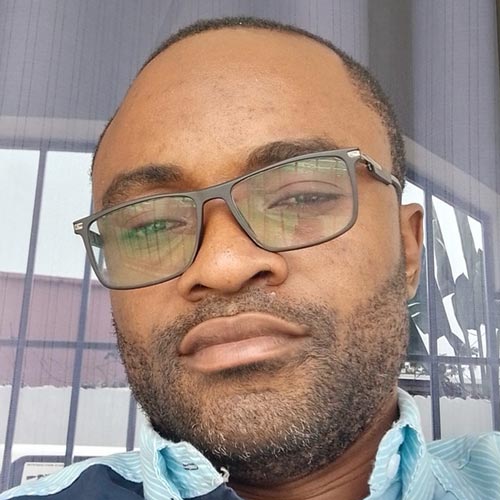
“How can a fund intended for victim reparations turn into a fund for illicit enrichment?” asks Nestor, a young Congolese man from the Lucha citizen movement. He is talking about this new trial for massive embezzlement of reparations which Uganda paid to the Democratic Republic of Congo (DRC) after a ruling by the International Court of Justice (ICJ).
As well as the main defendant Chançard Bolukola, some high-ranking officials from public institutions have taken the stand as witnesses to try to shed light on what happened to several million dollars embezzled from FRIVAO -- the Reparations and Compensation Fund for Victims of Uganda’s Illegal Activities in the DRC. These include the directors general of the National Electricity Company (SNEL), the Congolese Institute for Nature Conservation (ICCN), and the General Directorate for Public Procurement Control (DGCMP).
An “unsustainable” situation
On the sidelines of the trial, Justice Minister Guillaume Ngefa was also called before the Senate to explain himself over the management of the public institution under his oversight. Responding to a question on May 5, he lamented an “unsustainable” situation. According to Ngefa, FRIVAO has strayed from its mission of providing reparations to become “the scene of systemic dysfunction and embezzlement of public funds, as painfully evidenced by the first trial that led to conviction of the former Minister of State for Justice and the ongoing trial against the interim coordinator.”
Of the $195 million paid by Uganda in August 2025, only $28 million was disbursed to victims—whether genuine, fraudulent, or fictitious—and some were forced to pay kickbacks for receiving compensation, the current justice minister lamented.
Compensation payments remain suspended, although Ngefa announced in a cabinet meeting in early January 2026 that they would be resumed. According to him, the number of certified victims rose from 3,000 in 2024 to 14,000 or even 16,000 in 2025, which he says suggests the presence of “fake victims”. On March 19, FRIVAO launched a tender for an audit firm to analyse the victim register. This should allow compensation payments to resume shortly, the current minister maintains.
A host of irregularities in contract awards
The ongoing trial focuses mainly on irregularities in the awarding of public contracts blamed on Bolukola, who was manager of FRIVAO from his appointment in August 2024 to his arrest in July 2025. These include the Kisangani electrification contract signed with SNEL, as well as a contract with Divo SARL for production of a documentary on “Genocost” [genocide for financial gain], and a contract for the rehabilitation of the Kisangani Zoological and Botanical Garden managed by ICCN. Added to this is the involvement of “fictitious” companies, according to the prosecution. It estimates that the various contracts under review, concluded between 2023 and 2025, were worth over $30 million.
The Institute for Nature Conservation reportedly received a payment of $4 million without the approval of FRIVAO’s board of directors. They were not even informed, according to the board’s interim chairman Dismas Kitenge, who testified before the court on April 24. In addition, he said, even if the ICCN were to receive compensation, the money should not come from money allocated for victims but rather the 18% allocated to compensate damage to natural resources, in accordance with the ICJ order.
A six-minute documentary worth its weight in gold
At the same hearing on April 24, Teddy Lwamba, the current director general of SNEL, testified in his capacity as former Minister of Water Resources and Electricity. He talked about the $14 million contract signed between FRIVAO and the Congo Energy company for rehabilitation of the Kisangani hydroelectric power plant on the Tshopo River. Lwamba said he had identified irregularities in this contract. But he declined to give further details, referring the matter to “the competent authority for contractual matters”, i.e. the “Portfolio Ministry” responsible for managing all public enterprises.
Congo Energy was in fact selected by former minister Mutamba, and he is the one who authorized this payment, Bolukola argued in his defence.
Divo SARL CEO Rudy Molamba then took the stand to explain the production of a six-minute documentary for which FRIVAO paid $1.6 million, according to the prosecution. This was a “mistake”, Molamba assured the court, adding that “the overpayment has already been refunded” and that the initial contract was for $640,000 excluding tax.
As for Bolukola, he said he received a “verbal payment order” from Mutamba.
The indictment also includes construction of the Tshopo Provincial Assembly building at a cost of $200,000. The provincial institution did not exist during the Six-Day War and should not, therefore, have been the subject of so-called “collective” reparations, the prosecution argues.
“As the province’s leading institution, it was eligible to receive it,” Bolukola’s defence replied, without further explanation.
FRIVAO’s $250,000 payment for purchase of land to build a hospital in Kisangani, deemed “excessive”, was also brought up in court. “We’re talking about Kisangani as if it were a village. Kisangani is the country’s third-largest city; so buying a hectare for $250,000 isn’t too much,” Bolukola’s defence argued.
On April 30, the court summoned former justice minister Mutamba, whom Bolukola has consistently implicated. After justifying his absence on May 5 for “health reasons”, Mutamba also refused to appear on May 19. “Let them do whatever they want. I’ve already been convicted. I’m not going to appear,” he told the court officer who came to serve him with the summons. Mutamba is currently serving a three-year prison sentence, handed down in September 2025, for embezzling nearly $20 million from FRIVAO.
Civil society outrage
FRIVAO has faced criticism over its management ever since it was launched in May 2023. Four justice ministers and three management committees have come and gone, but questions about procedural compliance and transparency have persisted.
Recurring embezzlement by FRIVAO managers is causing outrage. When interviewed by Justice Info, New Congolese Civil Society coordinator Jonas Tshiombela denounced what he calls its “politicization”. “It is an injustice to victims who have already lost their loved ones, and sometimes their homes,” he said. “It is bad governance. From the point that managers of these funds are appointed by politicians, you can imagine what happens next. If there were competition [in the awarding of FRIVAO contracts], there would be a culture of accountability and transparency. When these funds arrive, no one tells us. When they distribute them, no one tells us. It’s only when things go sour that the general public realizes what’s happening. This is injustice organized and planned by those who are supposed to fight against injustice. It’s extremely serious and worrying, even for the future of the country.”
The next hearing is scheduled for June 2, with further hearings planned.