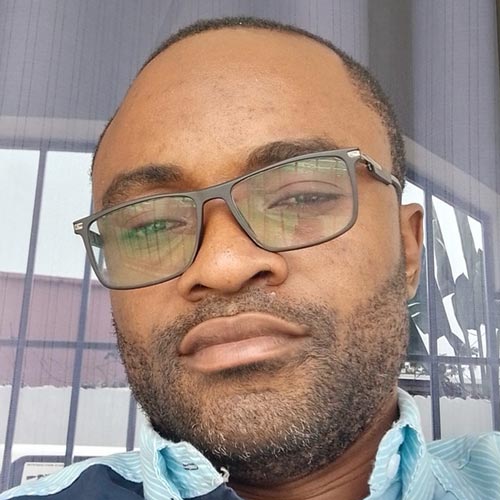
“We are called upon to seek the truth. What lies at the root of this so-called ‘Kamuina Nsapu’ conflict? We must also reconcile people, because communities have been torn apart. And we must also reconcile these communities with the public authorities, because victims accuse the State of failing to do its job.” So spoke the chair of the Central Kasai Truth, Justice and Reconciliation Commission (CPVJR). And although he appears optimistic, Bishop Augustin Loko knows that the mission set out in the commission’s founding charter is difficult, if not impossible, in terms of time and resources.
The commission is entirely dependent on international technical and financial partners. Its bank account has become dormant due to lack of activity, its commissioners are unpaid and its headquarters poorly maintained. This is the state of the CPVJR five years after its creation on July 15, 2021. It was established after the conflict between the Congolese armed forces (FARDC) and Kamuina Nsapu militia, which broke out ten years ago.
The death of Chief Jean-Pierre Mpandi (Kamuina Nsapu), killed by the FARDC in August 2016, led to a series of serious human rights violations lasting until 2018. This violence, documented in particular by the United Nations, resulted in more than 3,000 deaths and 1.5 million displaced persons. The Truth Commission’s role is to address these crimes but, despite the three-year extension of its mandate in July 2024, it is struggling to fulfil its remit. With one year to go before the expiry of its second mandate, it is only just beginning its operational phase.

Finally bearing witness to the atrocities, ten years on
On Saturday July 4, 2026, under the gentle sunshine of the dry season, a team of CPVJR investigators is taking statements from victims on the grounds of Mukoleshi School. The school is in the commune of Nganza, some seven kilometres from the centre of Kananga, once a stronghold of the Kamuina Nsapu militia. In March 2017, a security forces operation was carried out here, across several plots of land. Whilst pursuing militiamen, members of the FARDC and the Congolese National Police (PNC) went “door to door” killing, raping and abducting residents, and looting their property. For these hearings, the commission expects a sample of 500 people, with 100 people called to testify from each of Nganza’s five neighbourhoods.
The passage of time has not erased the scars of the atrocities. In the commune of Nganza, many people remember the events in detail. “Nganza was regarded as Dibaya territory, and was where Kamuina Nsapu lived. We were mistreated, as if we were all militiamen. When the soldiers arrived, from 28 to 30 March 2017 – Tuesday to Thursday – they had been ordered to go in and kill everything alive: birds, goats, everything. The sole aim was to kill,” a resident father of eleven told Justice Info.
“They turned up at my house in broad daylight and forced their way in. They asked me for money, but I didn’t have any. They tied me up, blindfolded me and took me practically naked to the Nganza local council office, where I was held for a few days. After I was released, I learned they had raped my wife and two daughters, aged 18 and 20. One of them even became pregnant. I’m living at home with the child born of that rape,” he continues slowly, voice heavy with sadness. “I’m calling for all these men to be arrested. Not just the soldiers, but also the commanders who sent them. And I want the state to compensate us.”
“On that Tuesday [28 March 2017], at 8 am, there were serious clashes. Security forces arrived here, went from door to door killing civilians,” recalls a mother, now in her fifties, who also wishes to remain anonymous. “They killed my 24-year-old daughter, who had two children. I have suffered terribly because of it.”
She confides she is ashamed on account of another crime she endured that day. “We had taken refuge far away in the Kamayi neighbourhood [Kananga municipality]. Whilst I was returning to try and find something to live on, I came across two soldiers. Both of them raped me at the same time – one vaginally, the other anally,” she says, breaking down in tears. “What can anyone give me today in exchange for my murdered daughter? Let the justice system deal with these people; let them be prosecuted and sentenced so that such acts never happen again,” she concluded, wiping her tears with her skirt.
A little further on, in a room, another woman told investigators how she had been raped, and presented her medical certificate. The stories told by these victims are deeply moving, says Symphorien Nkolomoni, a psychologist recruited by the CPVJR to support those giving evidence. “The victims tend to relive the events to the point of breaking down in tears. There is one woman who has suffered from depression. It may well be the first time these people have been asked about what they went through with a view to helping them recover. This makes psychological support all the more essential,” stresses this psychologist from the NGO APAM (Psychosocial Support and Multi-sectoral Assistance).
Where is the Congolese state?
These victims were identified by the commission, which says it relied on neighbourhood leaders, representatives and the victims’ relatives. Before Nganza, the CPVJR conducted its first investigations in early 2026 in Mulombodi. This religious site, situated next to Kananga airport, was the scene of a raid by security forces in September 2016, officially in search of militiamen who were believed to have taken refuge there. Cases of abductions, but above all of sexual violence, were reported. The commission interviewed more than 300 victims there over a period of ten days. After Nganza, the operation will move to Katoka, another commune in Kananga.
All these activities of the CPVJR are funded entirely by international partners: the United Nations Joint Human Rights Office is providing support through the Peacebuilding Fund, as part of a project led by UNDP to promote transitional justice, while Swiss NGO Trial International is also supporting the commission, alongside the European Union. Dominique Kambala, director of the NGO Congolese Society for the Rule of Law (SCED), criticises the state’s “lack of ownership” of this transitional justice mechanism. “Do we have any guarantee that the recommendations in the [CPVJR] report will be respected?” asks this former president of the Kasai Central Bar Association.
Under the decree of 15 July 2021 establishing it, the CPVJR is supposed to be funded by the province, but the province is not providing any funding. When asked about this, the commission chairman does not mince his words. “The province is poor,” he says, pointing out that, to date, the commissioners have not been paid and that only the commission’s activities are funded, thanks to international partners. “The work we are doing is work that really ought to be remunerated. But that isn’t happening…”
“For four or five years now, we have been working solely with the support of our partners for the activities we carry out. As far as I know, the provincial government has no funds. But the central government could look into it to ensure this work can be carried out under the right conditions,” he continues. “So far, it’s all been a matter of sacrifice.”
“We have approved the credit lines for the commission, but it is up to the provincial government to make resources available to it,” says Sosthène Kambidi, a provincial councillor. “Resources are limited – it is not easy to mobilise resources in this province. But there is also a lack of political will.”
Within the CPVJR, officials say they have lobbied repeatedly for support from the central government, without success. The UN’s recommendations for support to this commission also appear to have fallen on deaf ears. Since the commission’s creation, all national ministers responsible for human rights have been approached, but no progress has been made. Even the current minister, Samuel Mbemba, who recently visited Kananga to inaugurate the provincial human rights division’s building, showed little interest in the commission’s cause, laments the SCED.

Enormous challenges in the next 12 months
The CPVJR currently has eleven members – one commissioner resigned due to “incompatibility” with his political duties – and 30 investigators. Over the next twelve months, it will face a number of significant challenges, not least of which is carrying out its mapping of “emblematic” cases. It must travel to the five territories (Demba, Dimbelenge, Dibaya, Kazumba and Luiza), holding public hearings, compiling data and drafting the report. “This is a major challenge for us and one that requires resources,” Bishop Loko stresses. “I would like our state, our government – both provincial and national – to pay attention to the functioning of the CPVJR.” This commission, he stresses, is unique “because elsewhere in the world we have national commissions, but here it is a provincial commission, a grassroots commission”. “It is first and foremost a matter for the state,” he insists.
In addition to the CPVJR, another public body dedicated to transitional justice is operational in Kasai Central. This is the Victims’ Reparations Fund (FONAREV). However, the two institutions do not collaborate. “So far, FONAREV has been avoiding us. Yet it should be our primary national partner. They handle the reparations pillar and we handle the truth pillar,” says Bishop Loko. “The two institutions should be working hand in hand. We would wholeheartedly welcome such collaboration.” This is also the SCED’s wish. “Here we identify victims, there they identify victims. Yet we could channel the same funds together,” says Kambala, who says there is a need to listen to the perpetrators as well. “At the moment, only the victims are being interviewed. Will that establish the truth? To establish the truth, the perpetrators must also be interviewed.”
As for FONAREV, no one was able to respond, despite our repeated requests.