JUSTICE INFO IN-DEPTH INTERVIEWS
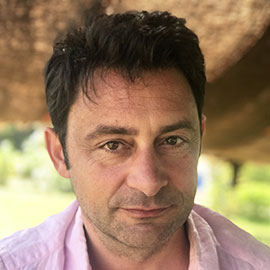
Julian Fernandez
Professor of public law
JUSTICE INFO: Did we not see, on October 9, two sides of a coin reflecting the broader state of international justice? On one side, there are those who cling to the idea that peace and world order can be regulated by law; and on the other, those who want to dismantle it and impose the law of the strongest. How would you describe that day?
JULIAN FERNANDEZ: In my view, international relations are generally going through a period of transition, a resurgence of strategic competition characterised by three phenomena: rising instability; a crisis of normativity; and, very interestingly, a crisis of narratives.
For me, that day illustrates this crisis of narratives. On the one hand, we have the honouring of a figure who, beyond who she is and what she has done, embodies the fight for a rules-based order, for multilateralism, and for international law.
What is particularly interesting about the award of this prize is the extent to which, in recent times, the emphasis has been placed on the importance of international law. In my view, Navi Pillay – her life and her work – stands at the crossroads of at least three major trajectories in 20th century international law.
First, democratisation. This is fundamental. At a time when democracy is in retreat, when the United States is no longer regarded by leading institutions such as V-Dem as a liberal democracy, Pillay embodied – in her struggle against apartheid, in her role in South Africa’s democratic transition, as one of the first non-white judges on the South African High Court – the fight for rule of law and for domestic democracy. This is a powerful message, given the current difficulties facing democratic political systems and the pull of authoritarianism.
The second defining aspect of her life is, of course, her fight for multilateralism and human rights. When we look today at the various crises affecting the UN, to recognise someone who served as UN High Commissioner for Human Rights and who played a significant role in the Human Rights Council’s commissions of inquiry – in this instance on the Occupied Palestinian territories – also sends a message about the value of UN multilateralism and all that it can do to curb violence and work towards positive peace.
“There is a tendency today to believe that everything can be resolved through immediate peace deals, negative peace or ceasefire agreements. We forget just how much long-term peace – the kind of peace that tackles the root causes of disputes and violence and which is capable of breaking the cycle of bitter strife – requires the rule of law.”
There is a tendency today to believe that everything can be resolved through immediate peace deals, negative peace or ceasefire agreements. We forget just how much long-term peace – the kind of peace that tackles the root causes of disputes and violence and which is capable of breaking the cycle of bitter strife – requires the rule of law, reparations, justice and development. It also requires speaking out. I believe that Navi Pillay’s work in the field of multilateralism, in the service of human rights, in conflict situations such as Palestine, is also something the Nobel Committee wished to recognise.
And then, of course, the final aspect is international criminal justice. At a time when its institutions are being criticised, and the International Criminal Court is facing friction and withdrawals, this prize recognises a figure who served as a judge at the ICC and who embodied its hopes in the Court’s early days.
Set against this narrative, the events [of October 9] offer a different portrayal of international relations, where power takes precedence over principles. The International Criminal Court has been added to the US Treasury’s sanctions list. What takes precedence is the immediate agenda, in which the United States takes a detached, unrestrained and uninhibited view of norms and constraints. This marks a new development in the US’s hardening stance and hostility towards the Court, with a deal ultimately being proposed whereby sanctions are suspended for the time being, until April 2027, provided that the Court’s Statute is reformed, that proceedings against Netanyahu and Gallant are dropped, that it is made clear the Afghanistan investigation cannot in any way target US officials. In other words, international criminal justice is being reshaped in a selective manner, with categorical and individual privileges granted to the major powers, in this instance the United States. This undermines one of the major developments in the law of international relations over recent decades.
What really struck me was this symbolic clash of narratives in current international relations: between those who still believe in a rules-based international order, the United Nations and multilateralism; and those who wish to break away from it, to pursue agendas of withdrawal and backroom deals – agendas which, ultimately, take no account of norms or obligations on how we are supposed to behave.
I might add one final, somewhat mischievous point regarding the Nobel Prize. It also recognised a figure who benefitted from education in the United States, at Harvard University. We are honouring someone who benefitted from academic freedom in the United States, from American knowledge, and from its appeal at a time when universities are under pressure. Would Navi Pillay be granted a visa today to go and work or study at Harvard, as she was able to do in the 1980s?
“What would international criminal justice be without the United States’ commitment at Nuremberg, at the ICTY [International Criminal Tribunal for the former Yugoslavia], at the ICTR [International Criminal Tribunal for Rwanda], in other hybrid courts, right through to the Special Chambers for Kosovo -- without US resources and the United States’ role as a driving force?”
This also echoes the historical role of the United States in the development of international criminal justice…
Absolutely. Here we see a figure whose education was shaped by the freedom and values of the United States. And the current US administration is punishing an institution which is part of a legal evolution that owes a great deal to the United States. What would international criminal justice be without the United States’ commitment at Nuremberg, at the ICTY [International Criminal Tribunal for the former Yugoslavia], at the ICTR [International Criminal Tribunal for Rwanda], in other hybrid courts, right through to the Special Chambers for Kosovo -- without US resources and the United States’ role as a driving force?
Clearly, there is a crisis of model: the United States has always supported international criminal justice, but only for others, not for itself. One of their key demands – beyond protecting their allies from arrest warrants and shielding themselves from investigations – is amendment of Article 12 of the Rome Statute, effectively changing just one word in the criteria governing the Court’s jurisdiction. This would ensure that, apart from referrals by the UN Security Council, the Court could only exercise jurisdiction in cases involving territorial and personal links. It would mean that the Court could only exercise jurisdiction over crimes committed on the territory of States Parties and by nationals of States Parties, so as to definitively protect the United States, which clearly has no intention of joining the ICC. It is both a step backwards and a clarification that the United States does not share the same view as others regarding the evolution of national law and international criminal justice. It sees the ICC as an instrument intended primarily for others, not for itself.
“It is nonetheless an absurd situation: on the US sanctions list, you have both ICC suspects like Joseph Kony, leader of the Lord’s Resistance Army in Uganda, and judges from the ICC itself. But Trump brushes that aside.”
Are we not simply talking in symbolic terms, given that, ultimately, the ICC does not really pose a threat to the United States?
Yes, and Trump -- apart from his emotions and psychology -- will like many leaders focus on the capacities rather than the intentions.
After all, the ICC has long been governed by a particularly cautious criminal policy, including situations of direct interest to the United States like the investigation in Afghanistan. The Office of the Prosecutor itself recently decided not to prioritise potential prosecutions for crimes committed by US officials in detention camps in Afghanistan. The idea was to prioritise crimes committed by the Taliban. The ICC also decided on two occasions not to pursue the idea of opening a probe into crimes by the British in Iraq. We may remember that the ICC was effectively mobilised by 43 states in the situation in Ukraine. In short, the US had established a kind of modus vivendi with the Court, reasoning like this: granted, it has the capacity, but in terms of its intentions, it clearly has other priorities; we can live with that and we can even support some of its prosecutions.
It is nonetheless an absurd situation: on the US sanctions list, you have both ICC suspects like Joseph Kony, leader of the Lord’s Resistance Army in Uganda, and judges from the ICC itself. But Trump brushes that aside. Of course, there is the weight of his relationship with Netanyahu and the progress of investigations and prosecutions on the situation in Israel. But so far as the US is concerned, in reality the Court and its Prosecutor have been rather cautious. There are no prosecutions either, to my knowledge, targeting US officials for obstruction of justice.
This is also about what the ICC symbolises -- as a model of justice and multilateralism: a body, an international organisation where the United States enjoys no privileges, and which the United States intends to fight.
“Let us not forget that the adoption of the Rome Statute and its subsequent entry into force undoubtedly represent the greatest diplomatic defeat in the entire history of the United States. There has always been a desire ever since for revenge on the part of US administrations, even though relations eased under Bush II and Obama. Under Trump, the United States is taking the gloves off.”
I would add that, for the United States, sanctions against the ICC are part of a long-standing tradition of exceptionalism when it comes to the rules governing the use of force, trade or the way in which governments treat their citizens. Under these circumstances, they could only oppose the ICC model, which downplays the role of the Security Council, rejects categorical privileges (including for nationals of non-state parties) or individual privileges (personal immunities), and grants the Prosecutor significant powers to investigate and prosecute crimes – such as war crimes and, under certain conditions, aggression – which place interventionist powers like the United States in a more exposed position. Let us not forget that the adoption of the Rome Statute and its subsequent entry into force undoubtedly represent the greatest diplomatic defeat in the entire history of the United States. There has always been a desire ever since for revenge on the part of US administrations, even though relations eased under Bush II and Obama. Under Trump, the United States is taking the gloves off here as elsewhere and demonstrating its determination to dismantle the ICC brick by brick. This is yet another illustration of its determination to exercise power without principle or restraint over allies and the institutions in which they believe.
Are the responses strong enough from the ICC and its member states?
I think we need to distinguish between two different things. There is a long-standing initiative by the ICC aimed at foresight and resilience in the face of potential hostile state actions. Because it is not just the US, there is also Russia -- albeit in a different vein. We may remember the cyber-attack of 2023. So there is a whole series of measures – sometimes discreet – by the ICC in cooperation with its host state [The Netherlands], with certain States Parties and with non-state actors – I am thinking particularly of tech firms – to mitigate the impact of potential sanctions, strengthen the Court’s digital independence, and safeguard its financial transactions. So you could say there has been an initial preparatory effort by the Court over the past several months or years to guard against hostile attacks.
“At European level and amongst the States Parties, there is now a sense that the era of appeasement is coming to an end, and a growing conviction and realisation that, even alongside diplomatic efforts, we must still equip ourselves with the necessary tools. We must move forward towards digital autonomy and banking autonomy in Europe, and towards instruments capable of reassuring European partners and European businesses, thereby safeguarding the ICC’s relations.”
Then there is the public response from both the Court and the States Parties. This is where we clearly see the dual nature of the ICC: as a criminal court, and as an international organisation. What has prevailed so far is a desire for appeasement. Anyone who attended the Assembly of States Parties last December was struck by the prevailing sentiment: let us give ourselves time, let us buy time, let us find ways to engage with the United States and move forward constructively.
Even in the ICC’s statements following US sanctions on its judges and prosecutors, there was a measured reaction. I have the feeling that with this second US action we are witnessing a turning point. The ICC’s reaction to the US sanctions targeting it as an institution is, after all, extremely firm and forceful. It takes everyone to task. We are witnessing a historic moment: what will we say about this later? What will we have achieved?
At European level and amongst the States Parties, there is now a sense that the era of appeasement is coming to an end, and a growing conviction and realisation that, even alongside diplomatic efforts, we must still equip ourselves with the necessary tools. We must move forward towards digital autonomy and banking autonomy in Europe, and towards instruments capable of reassuring European partners and European businesses, thereby safeguarding the ICC’s relations.
Only time will tell, particularly in the coming weeks and at the forthcoming Assembly of States Parties [early December 2026], where this issue will be central. But I have the feeling that, even whilst keeping channels of communication open with the US administration, we will need to arm ourselves, strengthen the tools at our disposal and find genuine paths to independence.
“The US measures, whilst they may appear rational within Trump’s framework, may in practice prove to be entirely against the broader interests of the United States.”
This, incidentally, explains why not everyone in the US is “in harmony” with this decision by Trump. There are a number of non-state actors –in particular the US “big tech” companies – who believe it runs somewhat counter to their interests, or even to the national interest, arguing: “You are effectively encouraging Europe to develop its own cloud services, its own companies and its own tools, and all of this could also lead to competition and obstacles.” We know that the big tech firms have been very active within the US Congress to try and stop new laws extending sanctions on the ICC being passed, and to ensure this remains a presidential matter. Because they are well aware that, when the ICC seeks partners other than Microsoft or Accenture, it is a question of market share and reputation for these firms. It is interesting that the US measures, whilst they may appear rational within Trump’s framework, may in practice prove to be entirely against the broader interests of the United States.
One gets the sense that, with the Nobel Prize and these new sanctions, positions are becoming clearer, but they are also polarising more sharply…
One of the defining features of contemporary international relations, amidst this global fragmentation, is the fragmentation of the West which wants to go beyond trans-Atlanticism. We have seen clearly in recent months how Canada, France and the European Union have been trying to develop new partnerships – initially in the defence sector – to present a united front.
I believe that the events [of October 9] sadly demonstrate to the world the fragility of what was once a strong transatlantic bond and of the West itself. It reveals a very deep rift over values, norms and perspectives in international relations. And it is now, in my view, up to the European states to accept this balance of power and equip themselves with the necessary tools.
That said, we must remain hopeful because I believe Trump thinks in terms of power dynamics, that any balance of power is based on a threat, and that no major advance by the European Union has ever been possible without the perception, at the very least, of an external threat. I believe the time has come to recognise this threat and to move beyond our differing interpretations and divisions in order to adopt the necessary instruments. It is also a matter of existential importance – for Europe and beyond – to remain faithful to international commitments and to its values.
On the American side, this is not the first time that Trump has played the “maximum pressure” card or issued an ultimatum. As these are presidential decrees and waivers, the situation can change rapidly, one way or the other.
“It is wrong to think that this concerns only the field of international criminal justice. For the US, this is a testing ground for other levers of influence.”
Is the ICC a sort of “institutional Greenland” that is being targeted to test reactions and ultimately back down?
The ICC is both a barometer of relations within the West – and a testing ground. The pressure being exerted on the ICC, and the sanctions being adopted could, depending on their effects, be replicated elsewhere – targeting, for example, the Inter-American Court of Human Rights and UN bodies. A number of sanctions have already been imposed on individuals or bodies linked to the Human Rights Council, and so on.
It is wrong to think that this concerns only the field of international criminal justice. For the US, this is a testing ground for other levers of influence. And finally, yes, we can hope that as in other areas, this divisive issue will ultimately be tempered and that agreements can be reached. There is nonetheless a constant threat that leaves indelible marks and which, I must stress, must prompt Europe to finally equip itself with the right tools.


Julian Fernandez is Professor of Public Law at the University of Paris-Panthéon-Assas and co-director of the master’s programme in Human Rights and International Justice. He is the author of around a hundred books and articles, including the ‘Textbook on International Criminal Law, LGDJ, 2026’. He is an elected member and former vice-chair of the International Criminal Court’s Advisory Committee on the Election of Judges. As a member of the Thucydides Centre, he co-directs the ‘Year of the International Relations’ and the strategic analysis platform Le Rubicon.